Feelings of 'Europeanness' are apparently on the rise, according to a new study published in the journal Science. Despite gloomy analyses over the EU's failure to connect to its citizens, Europe's younger generations are increasingly feeling "European" next to their national identities.
A team of Austrian sociologists found that older generations of citizens who only feel attachment to their nation – not to "Europe" - are dying out. The sociologists based their findings on European Commission's Eurobarometer studies from 1996 to 2004, which contain the question whether respondents feel, for example, only Swedish; Swedish and European; European and Swedish; or only European.
The group of respondents who express that they have "multiple identities" is on the rise, i.e. European identity is not replacing national identity. In 2004, 58 percent had some sense of feeling European, a number which is set to rise to 68.5 percent by 2030 if the current trend continues. Luxembourgers are the most "European" with 78 % feeling some sort of European identity. The Italians came second at 72 %, followed by the French (68 %) and the Spanish (64 %) while Swedes (45 %), Finns (43 %) and Brits (40 %) are at the other ends of the spectrum.
The study thinks that increasing media reporting at the European level, increasing mobility within the EU - across national borders - both among students and workers, and the fact that we live in the information communication age are factors contributing to Europeanness.
The study covers neither the period following the rejection of the EU constitutions in France and Netherlands nor the enlarged union of 25 member states, so we'll have to wait for new studies to find out what the present mood is. Being the ever European I think we'll have even better figures in the next study!
If you want a taste of European politics, play the "Be a MEP" game!

Wednesday, November 01, 2006


More Climate Change
Continuing on the same theme (picking up where I left a few weeks ago), several estimates of the cost of environmental destruction have been published. Turns out climate change may become more expensive than expected. According to a British study published on Monday, the Stern review, the world economy may shrink by 20 per cent. The cost for Sweden may be several billion SEK.
The Swedish government has launched a few studies to find out what needs to be done to decrease emissions and cope with the effects of climate change as well as estimate some of the costs. An initial report from one of the inquiries into the effects of climate change was published today. Tom Hedlund, principal secretary of the inquiry, predicts that global warming will increase rain and snow falls, which will threaten the waterways and coastal areas. Warmer weather will have an effect on agriculture and forestry.
So what can the individual citizen do? S/he does not need to stop driving but must look at what kind of car to drive and as soon as possible change to environmentally friendly fuel. Citizens should also demand that politicians increase access to and benefit green fuel in different ways. The individual can also look at trying to save energy at home, maybe by changing the old oil burner to a more environmentally friendly alternative.
At the global level it is about putting in extensive measures against the reasons for the climate changes, which foremost depends on the emissions of greenhouse gases. The new Swedish environment minister wants Sweden to be active and lead the global work in this area. He's planning a environment ministerial meeting in Sweden in June next year. One problem to solve is how to deal with the fast-growing economies, such as India, China and Brazil, which will be responsibnle for the biggest emissions in just a few years' time. Another problem is the USA.
I'm not expecting too much from the new Swedish government - in their election campaign the main coalition party downplayed the climate threat - but I'm hoping that these recent and forthcoming reports will give them the right push.
The Swedish government has launched a few studies to find out what needs to be done to decrease emissions and cope with the effects of climate change as well as estimate some of the costs. An initial report from one of the inquiries into the effects of climate change was published today. Tom Hedlund, principal secretary of the inquiry, predicts that global warming will increase rain and snow falls, which will threaten the waterways and coastal areas. Warmer weather will have an effect on agriculture and forestry.
So what can the individual citizen do? S/he does not need to stop driving but must look at what kind of car to drive and as soon as possible change to environmentally friendly fuel. Citizens should also demand that politicians increase access to and benefit green fuel in different ways. The individual can also look at trying to save energy at home, maybe by changing the old oil burner to a more environmentally friendly alternative.
At the global level it is about putting in extensive measures against the reasons for the climate changes, which foremost depends on the emissions of greenhouse gases. The new Swedish environment minister wants Sweden to be active and lead the global work in this area. He's planning a environment ministerial meeting in Sweden in June next year. One problem to solve is how to deal with the fast-growing economies, such as India, China and Brazil, which will be responsibnle for the biggest emissions in just a few years' time. Another problem is the USA.
I'm not expecting too much from the new Swedish government - in their election campaign the main coalition party downplayed the climate threat - but I'm hoping that these recent and forthcoming reports will give them the right push.
Thursday, October 12, 2006
The Ecological Clock
Three days ago, on 9 October, it was the Day of the Ecological Debt. For 20 years, the British organisation New Economics Foundation has kept count of our consumption of natural resources and every year they select an "overshoot day", on which we start overdrawing our natural supplies. What is scary is that this day enter earlier and earlier every year. In 1987 it was on 19 December; in 1995 21 November; but today, 2006, it was 9 October.
The ecological debt keeps on ticking, year after year. From 9 October we are living beyond the earth's means. Humanity has already consumed its quota of resources that can be renewed during this year, and we're draining on the ecological capital, and on the future of our children and children's children. To put it differently, it takes a year and three months to re-create what we have already consumed during the year. What's worse is that it is those who are least responsible for the consumption who suffer the most.
The ecological debt keeps on ticking, year after year. From 9 October we are living beyond the earth's means. Humanity has already consumed its quota of resources that can be renewed during this year, and we're draining on the ecological capital, and on the future of our children and children's children. To put it differently, it takes a year and three months to re-create what we have already consumed during the year. What's worse is that it is those who are least responsible for the consumption who suffer the most.
Monday, October 02, 2006
Oink, Oink
Draw a pig and find out about your personality! Sorry about my not-so-pretty pig but it's hard to draw with a mouse!
You are a realist. Sure, but I'm quite the idealist too, usually more optimistic than pessimistic.
You are direct, enjoy playing devil's advocate and neither fear nor avoid discussions.
Not sure about the playing devil's advocate bit.
You are emotional and naive, care little for details and are a risk-taker.
I think the pig got it wrong on most of those.
You are secure, stubborn, and stick to your ideals.
If I'm discussing politics, yes...
You are a good listener. I'd like to think so, yes.
The quality of your sex life is good. More is better! Yes!
You are a realist. Sure, but I'm quite the idealist too, usually more optimistic than pessimistic.
You are direct, enjoy playing devil's advocate and neither fear nor avoid discussions.
Not sure about the playing devil's advocate bit.
You are emotional and naive, care little for details and are a risk-taker.
I think the pig got it wrong on most of those.
You are secure, stubborn, and stick to your ideals.
If I'm discussing politics, yes...
You are a good listener. I'd like to think so, yes.
The quality of your sex life is good. More is better! Yes!
Tuesday, September 26, 2006
They Did It My Way (Not)
Well, you have probably heard that it didn't go my way in the election. Eric Sundström gives an excellent analysis of why the Social Democrats lost, looking for answers both in the opposition's strategies but also within the party itself.
Saturday, September 16, 2006
Vote Social Democrat!
Tomorrow 17 September is the Swedish general election (local, regional and national). I will vote for the Social Democratic party; to give them a new mandate for the next four years. Here's a list of blogs telling you why:
Eric Sundström
Tora Hansjons
Jonas Morian
Nisha & Krister
Nina Unesi LO
Bäst i världen
Motallians
Skolfröken
Eric Sundström
Tora Hansjons
Jonas Morian
Nisha & Krister
Nina Unesi LO
Bäst i världen
Motallians
Skolfröken
Monday, September 11, 2006
Sunday, September 03, 2006
Thursday, August 31, 2006
Anna Lindh Professorship at Harvard
Harvard University has established a permanent professorship in honour of Sweden's former foreign minister Anna Lindh. Researcher and author Samantha Power is the first to be awarded the prestigious position.
The professorship was the idea of S. Allen Counter, amongst others. S. Allen Counter is a professor in medicine at Harvard and has also been a visiting professor at the Karolinska Institute and is the Swedish consul-general for Boston and New England. It is the the first time a professorship has been named after a Swede. Samantha Power is currently working on a book about the UN's reform work. She did not know Anna Lindh personally, but admire her work and the fact that she was a strong supporter of human rights.
Donors funding the post include Ericsson and the Riksbank's jubilee fund. Minister for Foreign Affairs Jan Eliasson was also involved in drumming up support. He is pleased that the post has been awarded to Ms Power. "Power is a world authority and important opinion maker and whatever Harvard does gets publicity all over the world. It sends a message about what Anna Lindh stood for. The professorship is important for the multilateral debate in the USA, if only in a small way," says Mr Eliasson.
The professorship was the idea of S. Allen Counter, amongst others. S. Allen Counter is a professor in medicine at Harvard and has also been a visiting professor at the Karolinska Institute and is the Swedish consul-general for Boston and New England. It is the the first time a professorship has been named after a Swede. Samantha Power is currently working on a book about the UN's reform work. She did not know Anna Lindh personally, but admire her work and the fact that she was a strong supporter of human rights.
Donors funding the post include Ericsson and the Riksbank's jubilee fund. Minister for Foreign Affairs Jan Eliasson was also involved in drumming up support. He is pleased that the post has been awarded to Ms Power. "Power is a world authority and important opinion maker and whatever Harvard does gets publicity all over the world. It sends a message about what Anna Lindh stood for. The professorship is important for the multilateral debate in the USA, if only in a small way," says Mr Eliasson.
Thursday, August 24, 2006
Oxford First
I have promised pictures from my Oxford trip so here's a first (if I can't manage more I will give you pics from my trip to Spain instead).
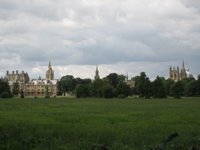
Sunday, August 13, 2006
They Come in Fours
I’ve been challenged by Nina Unesi as well as an old friend in the US, Kelly Jo, to answer a set of questions about myself.
4 jobs I have had in my life
Consultant
Pro-euro campaigner
Supply Controller
Shop Assistant
4 places I’ve lived in
Stockholm, Sweden
Brussels, Belgium
Oxford, UK
Pittsburgh, USA
4 TV series I enjoy watching
Friends
Scrubs
Lost
Desperate Housewives
4 places I've been on vacation
Turks & Caicos, Bahamas
Marmaris, Turkey
Bormes les Mimosa, France
Bologna, Italy
4 places I’d like to visit
China (preferably Beijing)
Iceland
Kenya (safari)
Easter Island
4 places I would rather be right now
Round-the-world trip
At the UN HQ just having landed a high-flying job
On a luxury all-inclusive romantic get-away with my boyfriend
Travelling back in time to see how the Easter Islanders built their statues
4 websites that I visit daily
Tjuvlyssnat
Pink Is the New Blog
Dagens Nyheter
Hotmail
4 favourite foods
Lebanese meze
Chicken korma (Indian)
Salad with chèvre, beetroot and walnuts
Ice cream
4 places where I feel at home
At home
London
A nice pub
Rooms with many books
4 things that I wish for
A great career
Children
A long and healthy life
Travel the world
4 concerts I've been to
Sheryl Crow
Michael Jackson
New Kids on the Block
Sting
4 persons I want to challenge
Marianne
Nonna
Marina
Edina
4 jobs I have had in my life
Consultant
Pro-euro campaigner
Supply Controller
Shop Assistant
4 places I’ve lived in
Stockholm, Sweden
Brussels, Belgium
Oxford, UK
Pittsburgh, USA
4 TV series I enjoy watching
Friends
Scrubs
Lost
Desperate Housewives
4 places I've been on vacation
Turks & Caicos, Bahamas
Marmaris, Turkey
Bormes les Mimosa, France
Bologna, Italy
4 places I’d like to visit
China (preferably Beijing)
Iceland
Kenya (safari)
Easter Island
4 places I would rather be right now
Round-the-world trip
At the UN HQ just having landed a high-flying job
On a luxury all-inclusive romantic get-away with my boyfriend
Travelling back in time to see how the Easter Islanders built their statues
4 websites that I visit daily
Tjuvlyssnat
Pink Is the New Blog
Dagens Nyheter
Hotmail
4 favourite foods
Lebanese meze
Chicken korma (Indian)
Salad with chèvre, beetroot and walnuts
Ice cream
4 places where I feel at home
At home
London
A nice pub
Rooms with many books
4 things that I wish for
A great career
Children
A long and healthy life
Travel the world
4 concerts I've been to
Sheryl Crow
Michael Jackson
New Kids on the Block
Sting
4 persons I want to challenge
Marianne
Nonna
Marina
Edina
Sunday, July 30, 2006
Ford of the Ox
Am off on holiday to England for a week so I won't blog for a while but lately my blogging has taken on a weekly or fortnightly habit anyway so not a big change.. I promise to tell you all about my adventures though, should there happen anything of interest in Oxford or London, which is where I'm spending my well-deserved annual leave (and to Spain, later on in August).
Wednesday, July 26, 2006
Team Aiko
I wrote earlier about Japan's delight that Prince Akishino of Japan and his wife are expecting a child, as the child, if it is a boy, would save the blood line of the Japanese monarchy. Without a boy they are left with having to change the order of succession to allow Princess Aiko, daughter of the Japanese Crown Princess and the real heir(ess) to the throne one could say, to become Crown Princess and eventually queen.
While awaiting the birth, Japanese history professors are emphasising the long unbroken male line of emperors (choosing not to mention the fact that in the middle ages eight female emperors reined Japan). The danger with allowing female succession is that a queen has to marry a non-royal person, in effect a commoner. A Japanese prince has a solution to this problem: 1) restore the royal status of the old prince sovereign families; 2) allow the emperor to adopt a male member of one of these families; 3) revive "extinct" sovereign families by letting their rites be performed by someone from the royal family; and 4) reintroduce royal concubines. All this just to avoid a woman to inherit the throne.
While awaiting the birth, Japanese history professors are emphasising the long unbroken male line of emperors (choosing not to mention the fact that in the middle ages eight female emperors reined Japan). The danger with allowing female succession is that a queen has to marry a non-royal person, in effect a commoner. A Japanese prince has a solution to this problem: 1) restore the royal status of the old prince sovereign families; 2) allow the emperor to adopt a male member of one of these families; 3) revive "extinct" sovereign families by letting their rites be performed by someone from the royal family; and 4) reintroduce royal concubines. All this just to avoid a woman to inherit the throne.
Tuesday, July 25, 2006
Good Hair Day?
Letter to the Economist from Alexander Ferworn, Toronto:
Sir - Thank you for letting us know that Hillary Clinton was "decked out in an orange trouser-suit" during a recent conference (Lexington, June 17th). I am using this information in conjunction with economic policy I have gleaned from various fashion magazines to make up my mind about her candidacy. Perhaps in the future you could report if Al Gore's tie matched his trousers and if George Bush wore shorts on a hot day.
Ferworn highlights a very typical thing - it seems to be very important to add what women are wearing, what hairstyle they have, etc. as if this somehow tells us how good of a politician or a business leader they are or would be, whilst this wouldn't even be considered when it comes to men.
Sir - Thank you for letting us know that Hillary Clinton was "decked out in an orange trouser-suit" during a recent conference (Lexington, June 17th). I am using this information in conjunction with economic policy I have gleaned from various fashion magazines to make up my mind about her candidacy. Perhaps in the future you could report if Al Gore's tie matched his trousers and if George Bush wore shorts on a hot day.
Ferworn highlights a very typical thing - it seems to be very important to add what women are wearing, what hairstyle they have, etc. as if this somehow tells us how good of a politician or a business leader they are or would be, whilst this wouldn't even be considered when it comes to men.
Monday, July 17, 2006
Kids Say the Darndest Things
From the site tjuvlyssnat.se with conversations and encounters overheard, which I wrote about earlier:
(A very hairy man in shorts and sleeveless shirt enters the train on the Stockholm underground)
Boy 5+: "Mum, why does that man have fur?"
The mother: "But schhh!"
Boy 5+ (screams): "But why does he have fur?"
(Everybody on the train start smiling, the man looks angrily at the kid)
Boy 5+ (a little scared): "Mum, the bear is looking at me angrily now!"
(A very hairy man in shorts and sleeveless shirt enters the train on the Stockholm underground)
Boy 5+: "Mum, why does that man have fur?"
The mother: "But schhh!"
Boy 5+ (screams): "But why does he have fur?"
(Everybody on the train start smiling, the man looks angrily at the kid)
Boy 5+ (a little scared): "Mum, the bear is looking at me angrily now!"
Tuesday, July 11, 2006
More Amazing Talent
An 11-year-old with an amazing voice and a new Whitney Houston. We also have a little girl with attitude!
* Thanks to PJ for the links
* Thanks to PJ for the links
Monday, July 10, 2006
Tuesday, July 04, 2006
Tuesday, June 27, 2006
Domestic Bliss
Swedish Social Democrats are very divided on the issue of household or domestic services (e.g. hiring someone to clean windows or perform regular cleaning services in one's home). At the moment there are no subsidies for such services although a couple of years ago Sweden experimented with a tax deductible for carpenting and other building services (mostly as a market stimulation measure). In a debate article in yesterday's DN, two local Social Democrats (Lena Micko and Mattias Ottosson) in the region of Östergötland demand tax deductions for domestic services. Not just cleaning but a wide selection of services in the home such as changing curtains or gardening should be included to make it easier for families with small children in their every-day lives or allow elderly to stay in their own homes longer. Micko and Ottosson estimate that a tax reduction could create 10,000 new jobs (the figure is based on estimates based on Finland where tax subsidies on domestic services were introduced a few years ago). I am very much in favour of their proposal.
In "Give us household services instead of moralising" they argue that Sweden (mainly the Social Democrats and the left) needs to move beyond arguments that is it wrong or obsolete to hire help in one's home. Society legitimises childcare as a perfectly normal service parents buy (of course pre-school is mainly about providing our children with education but part of the day is plain care) but if parents rather want to spend some time with their children and contract out building or cleaning, they are "punished" by having to pay a firm quite a substantial amount (unless they find someone on the black market). Moreover, the government has created so-called "plus jobs" where unemployed people are hired by the municipalities (subsidised by the government) to in effect perform domestic services for e.g. elderly.
Like Micko and Ottosson I do not believe that providing domestic services is a second class job and that it would mean going back to a situation with masters and servants. What is the difference between cleaning an office or a classroom and a private home? As long as workers are treated as professionals and have rights, I do not see a problem. It is also still a fact that women are more likely to cook, clean, etc. - in many ways women are working double - and if a tax subsidy could facilitate the lives of many women and ultimately lead to more equality in the home and in the labour market, I am all for it.
Presently there are too many regulations and means testing for domestic services. Not all people work for benevolent employers who offer domestic services as an extra benefit (which for the company is deductible). Many use "gray" or "black" services, i.e. persons that they can hire and fire arbitrarily from one day to the other.
Jonas Morian has also blogged on this topic. He thinks that the issue may even decide the outcome of the September elections, basing his argument on the fact that the party or political bloc able to gain the most trust for its ability to create jobs will win the election. A substantially decreased employment payroll tax for the services sector or a similar tax deduction would in all likelihood stimulate the private demand for white services. A political initiative that would limit the black market for these services, create more white jobs and increase tax revenues would win many votes.
In "Give us household services instead of moralising" they argue that Sweden (mainly the Social Democrats and the left) needs to move beyond arguments that is it wrong or obsolete to hire help in one's home. Society legitimises childcare as a perfectly normal service parents buy (of course pre-school is mainly about providing our children with education but part of the day is plain care) but if parents rather want to spend some time with their children and contract out building or cleaning, they are "punished" by having to pay a firm quite a substantial amount (unless they find someone on the black market). Moreover, the government has created so-called "plus jobs" where unemployed people are hired by the municipalities (subsidised by the government) to in effect perform domestic services for e.g. elderly.
Like Micko and Ottosson I do not believe that providing domestic services is a second class job and that it would mean going back to a situation with masters and servants. What is the difference between cleaning an office or a classroom and a private home? As long as workers are treated as professionals and have rights, I do not see a problem. It is also still a fact that women are more likely to cook, clean, etc. - in many ways women are working double - and if a tax subsidy could facilitate the lives of many women and ultimately lead to more equality in the home and in the labour market, I am all for it.
Presently there are too many regulations and means testing for domestic services. Not all people work for benevolent employers who offer domestic services as an extra benefit (which for the company is deductible). Many use "gray" or "black" services, i.e. persons that they can hire and fire arbitrarily from one day to the other.
Jonas Morian has also blogged on this topic. He thinks that the issue may even decide the outcome of the September elections, basing his argument on the fact that the party or political bloc able to gain the most trust for its ability to create jobs will win the election. A substantially decreased employment payroll tax for the services sector or a similar tax deduction would in all likelihood stimulate the private demand for white services. A political initiative that would limit the black market for these services, create more white jobs and increase tax revenues would win many votes.
Monday, June 26, 2006
Boring but Wonderful
No, she's not totally right but there's probably some truth to it :)
(Thanks to Mats Lindén for the link)
(Thanks to Mats Lindén for the link)
Thursday, June 22, 2006
The Rapist Among Us
Every week there is one murder as a result of domestic violence in Sweden. The equivalent number in the UK is two, but the UK has six times more inhabitants (9 and 60 million respectively), indicating that we have a serious problem in Sweden (though I will not attempt to answer "why").
Lately Swedish media has given much attention to rapes and other sexual assaults as a result of the catching of a serial rapist in the northern city of Umeå. The so-called Haga man, who is on trial right now, is charged with the rapes and very violent abuse of six women from the end of the 1990s onwards. People expect rapists to be crazy weirdos that would be easily recognisable in the street, but the Haga man, to the surprise of many, was a married father of two with a permanent job and described by friends and family as a regular guy.
We need to highlight and create awareness that most rapes and sexual violence occur in the home, within families or by a person the victim knows in some way already. Only a small share of rapes is the sort of attack rape in the middle of the night. This means that most rapists are in fact seemingly “normal” men.
In a recent column in DN, Katarina Wennstam, reporter on Swedish television and author of the book “A Real Rapist”, writes about "the human being behind the demon". She says that the Haga man is a mystery and that he probably will remain so.
It certainly looks like a demon has been forced out of the shadows and has been given a face, a name, even ascribed personal characteristics. But at the same time a shudder goes through the Swedish collective consciousness. We do not see a connection between the man and the demon.
According to Wennstam, who is very critical of how the media focuses on group rapes or assault rapes, all news media give insufficient attention to the by far most common rapes, those committed in the home. The greatest risk for a woman is in the home, not in a dark park. Wennstam argues that journalists have painted a picture of rapists in too black-and-white contrasts. The perpetrator that we meet in the media is almost always a monster, a man who is not of this world. He may be a monster in some people’s eyes but
most victims see the nuances. They may know their perpetrator, even like or love him, think that he has his good sides, or [they] succeed at least to see both the monster and the human being in the same person.
Most of the women who are subject to sexual violence in the home do not report what has happened to them. If the man is well adjusted, liked and handsome, the woman has an extra barrier to overcome before she dares to report him, mainly because she doubts that anybody will believe her.
The Haga man is not the first family father to be charged with serious sexual violence. But it is the first time a man charged with rape is described as father, friend and colleague in addition to his role as the Haga man, i.e. not in the usual black-and-white extremes. It is not “us and them” anymore, but one of us. Wennstam concludes:
This is one of society’s oldest and most tenacious myth, that men rape of sudden, exploding lust and because they cannot get sex in some other way. Rape is not about sex and lust, but about power and oppression.
Lately Swedish media has given much attention to rapes and other sexual assaults as a result of the catching of a serial rapist in the northern city of Umeå. The so-called Haga man, who is on trial right now, is charged with the rapes and very violent abuse of six women from the end of the 1990s onwards. People expect rapists to be crazy weirdos that would be easily recognisable in the street, but the Haga man, to the surprise of many, was a married father of two with a permanent job and described by friends and family as a regular guy.
We need to highlight and create awareness that most rapes and sexual violence occur in the home, within families or by a person the victim knows in some way already. Only a small share of rapes is the sort of attack rape in the middle of the night. This means that most rapists are in fact seemingly “normal” men.
In a recent column in DN, Katarina Wennstam, reporter on Swedish television and author of the book “A Real Rapist”, writes about "the human being behind the demon". She says that the Haga man is a mystery and that he probably will remain so.
It certainly looks like a demon has been forced out of the shadows and has been given a face, a name, even ascribed personal characteristics. But at the same time a shudder goes through the Swedish collective consciousness. We do not see a connection between the man and the demon.
According to Wennstam, who is very critical of how the media focuses on group rapes or assault rapes, all news media give insufficient attention to the by far most common rapes, those committed in the home. The greatest risk for a woman is in the home, not in a dark park. Wennstam argues that journalists have painted a picture of rapists in too black-and-white contrasts. The perpetrator that we meet in the media is almost always a monster, a man who is not of this world. He may be a monster in some people’s eyes but
most victims see the nuances. They may know their perpetrator, even like or love him, think that he has his good sides, or [they] succeed at least to see both the monster and the human being in the same person.
Most of the women who are subject to sexual violence in the home do not report what has happened to them. If the man is well adjusted, liked and handsome, the woman has an extra barrier to overcome before she dares to report him, mainly because she doubts that anybody will believe her.
The Haga man is not the first family father to be charged with serious sexual violence. But it is the first time a man charged with rape is described as father, friend and colleague in addition to his role as the Haga man, i.e. not in the usual black-and-white extremes. It is not “us and them” anymore, but one of us. Wennstam concludes:
This is one of society’s oldest and most tenacious myth, that men rape of sudden, exploding lust and because they cannot get sex in some other way. Rape is not about sex and lust, but about power and oppression.
Monday, June 19, 2006
Thursday, June 15, 2006
Offside Rule - Women's Style
In the spirit of the World Cup but with the risk of being politically incorrect and offending members of my own sex, I give you the "offside rule" for women (I used to play football myself for many years so I have a pretty good understanding of the rule already):
You're in a shoe shop, second in the queue for the till. Behind the shop assistant on the till is a pair of shoes which you have seen and which you must have. The female shopper in front of you has seen them also and is eyeing them with desire. Both of you have forgotten your purses.
It would be rude to push in front of the first woman if you had no money to pay for the shoes. The shop assistant remains at the till waiting.
Your friend is trying on another pair of shoes at the back of the shop and sees your dilemma. She prepares to throw her purse to you.
If she does so, you can catch the purse, then walk round the other shopper and buy the shoes!
At a pinch she could throw the purse ahead of the other shopper and "whilst it is in flight" you could nip around the other shopper, catch the purse and buy the shoes!
BUT, you must always remember that until the purse has "actually been thrown", it would be plain wrong for you to be in front of the other shopper and you would be OFFSIDE!
You're in a shoe shop, second in the queue for the till. Behind the shop assistant on the till is a pair of shoes which you have seen and which you must have. The female shopper in front of you has seen them also and is eyeing them with desire. Both of you have forgotten your purses.
It would be rude to push in front of the first woman if you had no money to pay for the shoes. The shop assistant remains at the till waiting.
Your friend is trying on another pair of shoes at the back of the shop and sees your dilemma. She prepares to throw her purse to you.
If she does so, you can catch the purse, then walk round the other shopper and buy the shoes!
At a pinch she could throw the purse ahead of the other shopper and "whilst it is in flight" you could nip around the other shopper, catch the purse and buy the shoes!
BUT, you must always remember that until the purse has "actually been thrown", it would be plain wrong for you to be in front of the other shopper and you would be OFFSIDE!
Tuesday, June 13, 2006
Social Mobility - A Product of the Welfare State
In its May 27th edition, the Economist presents two research papers* on social mobility, which both confirm that European society is far less stable than America's.
The aim of the European welfare states and their redistribution of wealth and income is to rid society of class and move people up the ladder. At the same time Europeans maintain a static view of society. They dislike the extremes of wealth and poverty in America and believe that too much job mobility leads to insecurity. In addition, they are wary of capitalism and market powers. Social stability is thus desirable even if it comes for a price: inflexibility when it comes to market competition and the labour market.
Yet, in reality, European society - and especially in the Nordic countries - is far more mobile than America's. The two research papers define mobility as the difference of income between children and their parents or how long people in one income group stays there. Based on this factor, Nordic countries stand out.
The studies found that it is mobility at the bottom rather than overall social mobility that is most significant. And it is here where the difference between the Nordic countries and America is greatest. In the Nordic countries (as well as in Britain) over 70 % of the poorest childrens escaped from poverty within one generation. In America that figure is around 50 %. Furthermore, in the Nordic countries the link between the earnings of parents and children near the bottom is almost non-existent. However, when it comes social mobility at the middle-class levels the difference between Europe and America is not that big.
So what explains this situation? The first explanation is the tax and welfare systems (redistribution) in the Nordic countries.
One might expect social mobility and economic flexbility to go together - in fact, to be two sides of the same coin. But to the extent that redistribution is an explanation, it implies the opposite: that social mobility is a product of high public spending, a bit like the low incidence of poverty or longer life expectancy (on both of which Europe also does better than America). But greater public spending tends also to be associated with less economic flexibility - which is why Nordic countries have sought to limit the more arthritis-inducing features of their tax-and-spend programmes.
But redistribution is not the whole explanation. Education is the next crucial factor for social mobility, especially an education system that is less class-divided than the American one (or the rest of Europe for that matter). All four Nordic countries fair very well in international comparisons (e.g. OECD) of their education systems.
Eric Sundström provides some political commentary on these research findings and the article in the Economist (in Swedish).
* "Non-linerarities in Inter-generational Earnings Mobility" and "American Exceptionalism in a New Light" (multiple authors)
The aim of the European welfare states and their redistribution of wealth and income is to rid society of class and move people up the ladder. At the same time Europeans maintain a static view of society. They dislike the extremes of wealth and poverty in America and believe that too much job mobility leads to insecurity. In addition, they are wary of capitalism and market powers. Social stability is thus desirable even if it comes for a price: inflexibility when it comes to market competition and the labour market.
Yet, in reality, European society - and especially in the Nordic countries - is far more mobile than America's. The two research papers define mobility as the difference of income between children and their parents or how long people in one income group stays there. Based on this factor, Nordic countries stand out.
The studies found that it is mobility at the bottom rather than overall social mobility that is most significant. And it is here where the difference between the Nordic countries and America is greatest. In the Nordic countries (as well as in Britain) over 70 % of the poorest childrens escaped from poverty within one generation. In America that figure is around 50 %. Furthermore, in the Nordic countries the link between the earnings of parents and children near the bottom is almost non-existent. However, when it comes social mobility at the middle-class levels the difference between Europe and America is not that big.
So what explains this situation? The first explanation is the tax and welfare systems (redistribution) in the Nordic countries.
One might expect social mobility and economic flexbility to go together - in fact, to be two sides of the same coin. But to the extent that redistribution is an explanation, it implies the opposite: that social mobility is a product of high public spending, a bit like the low incidence of poverty or longer life expectancy (on both of which Europe also does better than America). But greater public spending tends also to be associated with less economic flexibility - which is why Nordic countries have sought to limit the more arthritis-inducing features of their tax-and-spend programmes.
But redistribution is not the whole explanation. Education is the next crucial factor for social mobility, especially an education system that is less class-divided than the American one (or the rest of Europe for that matter). All four Nordic countries fair very well in international comparisons (e.g. OECD) of their education systems.
Eric Sundström provides some political commentary on these research findings and the article in the Economist (in Swedish).
* "Non-linerarities in Inter-generational Earnings Mobility" and "American Exceptionalism in a New Light" (multiple authors)
Monday, June 12, 2006
Underground Etiquette
Jonas Morian Promemorian gives tourists or others who don't travel on the Stockholm underground that often some tips on how to behave and what to avoid in order not to annoy fellow passengers. These could be equally applied to underground systems elsewhere (with some moderation).
(Free translation)
Stockholm underground system is starting to fill up by people who apparently are unfamiliar with the city's unwritten rules. Since I like tourism, but hate lack of respect for social codes, I give you - in an eagerly awaited and updated repeat from June 2005 - some tips for you who visit our beautiful capital:
(Free translation)
Stockholm underground system is starting to fill up by people who apparently are unfamiliar with the city's unwritten rules. Since I like tourism, but hate lack of respect for social codes, I give you - in an eagerly awaited and updated repeat from June 2005 - some tips for you who visit our beautiful capital:
- One cannot swipe all sorts of tickets through the automatic barriers and expect them to open. They only work with tickets with a magnetic stripe.
- Find out where you are going before approaching the ticket booth. Admittedly staff are expected to provide tips on nice sites in Stockholm and how you can get there with the underground and other means of public transportation, but striking up a long conversation is not appreciated by those queueing behind you.
- On the escalators people walk to the left. Preferably in a fast pace. You stand to the right - but we prefer that you still move forward albeit in a slower pace than in the left lane.
- When you are at the top of the escalator (or at the bottom for that matter) keep on going in the same direction. If you are unsure where you are going, yield immediately and let the people behind you pass. Don't stop and look around you. Observ that this rule applies equally to lifts and underground trains.
- Respect your co-passengers' personal spheres. In plain terms: don't stand too close. Sure, it can be difficult in rush hour on a full train, but always try to at least avoid body contact.
- It is good to keep a low, relaxed profile. Your fellow passengers are not potential new friends. On the other hand it is of course alright to ask for directions. But don't count on Stockholmers to understand what you mean if you ask for track or line numbers.
- On the underground maps the different lines are marked in blue, green and red. This has nowadays no direct correlation with the colour of the actual underground car. You don't need to sit and wait for a red train to be certain that the train really to Ropsten really takes you to Ropsten.
- Occupy one seat on the underground. Your bag does not need its own seat. If you choose to stand instead of sitting, take off your backpack. Okay, many Stockholmers don't always follow this rule but I promise that we appreciate you more if you do.
- Let people get off the train before you try to get on. See also the comment to rule 8.
Finally Promemorian points us to this site on underground etiquette in London for further inspiration.
Sunday, June 04, 2006
From Honour Killings to Suicides
As part of its bid to meet EU membership requirements, Turkey in 2005 approved new legislation making "honour killings" - the practice of men killing their female relatives for perceived immoral behaviour - punishable by life in prison. So far so good. However, growing numbers of female suicides raise suspicion that women are now being forced or pressured by relatives to kill themselves instead. An estimated 70 women die in honour killings in Turkey every year, mostly in the south-east, the country's poorest and most conservative region, and now suicides seem to reach similar numbers. The real figure may be higher as in remote villages, deaths (or births) are not always recorded. In a survey conducted in this region in 2005, 40 % of males said a women guilty of adultery should be killed. And violence against women is accepted across Turkey. Domestic violence is considered a family matter.
Hopefully the prospect of future EU membership will create enough political willpower to enforce further legislation and lasting positive change.
(Earlier post about Turkey)
Hopefully the prospect of future EU membership will create enough political willpower to enforce further legislation and lasting positive change.
(Earlier post about Turkey)
Saturday, June 03, 2006
The Status Syndrome
I went to a very interesting book launch and seminar on 30 May. Sir Michael Marmot presented his book The Status Syndrome - How our social position affects our health and life expectancy.
Genes, lifestyle and access to healthcare are important for health, but other factors matter even more; how we live in society and what our situation at work is like. Michael Marmot has examined the relation between status and health - the status syndrome - and highlights the importance of e.g. education, income, parents' background and occupation. Based on three decades of research he presents evidence for how subtle differences in social position can lead to important differences in health and life expectancy.
The Status Syndrome is not about illness for the poor and good health for everybody else, but about a continuous variation, a so-called health gradient. Already in the 1970s Marmot studied British civil servants and found that illness frequency and mortality increased the further down the social ladder he looked. The same pattern is found all around the world, including in Sweden. (Marmot also studied baboons and found a similar pattern of mortality depending on dominance or subordinance.) In Washington D.C. the average life expectancy between a black person in the inner city is over 20 years shorter than a rich white person 15 metro stops away in Maryland. In the industrialised countries we think that we have solved everything, but we have huge inequalities in health. The so-called Swedish paradox is that Sweden has the widest inequalities in health in Europe (except in absolute terms), e.g. the mortality of manual v. non-manual labour.
Over a certain level of resources it is what people have in comparison to others that is decisive for their health. Money by itself does not matter - it is what you can do with the money relative to other people that matters. According to Marmot's research people prefer relative standing rather than more money in absolute terms. One anecdote from Marmot's studies is that Oscar winners on average live four years longer than colleagues who have been "just" nominated. Another example is that mortality is higher among people with a Masters than among people with a Doctorate.
Supporting relations in the private sphere and the degree of trust and social solidarity in the society are central dimensions for health. Control, social participation and health are fundamental needs that are linked. As people are different, inequalities will always exist, but the scope of their effects on health can be controlled according to Marmot. If we understand the link between inequalities and health, we can do something about it.
** Sir Michael Marmot is Professor in Epidemiology and Public Health at UCL and Head of the International Centre for Health and Society. He is also Chairman of the WHO's Global Commission on Social Determinants of Health. In 2004 he was awarded the Balzan Prize in epidemiology and in 2000 he was knighted for his efforts within epidemiology and the understanding of inequalities in health.
Genes, lifestyle and access to healthcare are important for health, but other factors matter even more; how we live in society and what our situation at work is like. Michael Marmot has examined the relation between status and health - the status syndrome - and highlights the importance of e.g. education, income, parents' background and occupation. Based on three decades of research he presents evidence for how subtle differences in social position can lead to important differences in health and life expectancy.
The Status Syndrome is not about illness for the poor and good health for everybody else, but about a continuous variation, a so-called health gradient. Already in the 1970s Marmot studied British civil servants and found that illness frequency and mortality increased the further down the social ladder he looked. The same pattern is found all around the world, including in Sweden. (Marmot also studied baboons and found a similar pattern of mortality depending on dominance or subordinance.) In Washington D.C. the average life expectancy between a black person in the inner city is over 20 years shorter than a rich white person 15 metro stops away in Maryland. In the industrialised countries we think that we have solved everything, but we have huge inequalities in health. The so-called Swedish paradox is that Sweden has the widest inequalities in health in Europe (except in absolute terms), e.g. the mortality of manual v. non-manual labour.
Over a certain level of resources it is what people have in comparison to others that is decisive for their health. Money by itself does not matter - it is what you can do with the money relative to other people that matters. According to Marmot's research people prefer relative standing rather than more money in absolute terms. One anecdote from Marmot's studies is that Oscar winners on average live four years longer than colleagues who have been "just" nominated. Another example is that mortality is higher among people with a Masters than among people with a Doctorate.
Supporting relations in the private sphere and the degree of trust and social solidarity in the society are central dimensions for health. Control, social participation and health are fundamental needs that are linked. As people are different, inequalities will always exist, but the scope of their effects on health can be controlled according to Marmot. If we understand the link between inequalities and health, we can do something about it.
** Sir Michael Marmot is Professor in Epidemiology and Public Health at UCL and Head of the International Centre for Health and Society. He is also Chairman of the WHO's Global Commission on Social Determinants of Health. In 2004 he was awarded the Balzan Prize in epidemiology and in 2000 he was knighted for his efforts within epidemiology and the understanding of inequalities in health.
Thursday, June 01, 2006
Congestion Charge Update 2
It would actually be quite nice if the American ambassador in Britain could pay the charge...and not actually try and skive out of it like a chiselling little crook.
Ken Livingstone, London's Mayor, on the US embassy's refusal to pay the toll levied on cars driven in central London. Some foreign 50 embassies say they are exempt under the international diplomatic law.
In Stockholm this is not an issue since the congestion is theoretically and legally a tax, which diplomatic services are automatically exempted from. Considering the small sums involved in the scheme of things, it is very disappointing that the US embassy in London doesn't just pay.
Since my last update, a poll has shown that Stockholmers are very much in favour of the trial and that the reduction of traffic seems to be constant.
For April:
Ken Livingstone, London's Mayor, on the US embassy's refusal to pay the toll levied on cars driven in central London. Some foreign 50 embassies say they are exempt under the international diplomatic law.
In Stockholm this is not an issue since the congestion is theoretically and legally a tax, which diplomatic services are automatically exempted from. Considering the small sums involved in the scheme of things, it is very disappointing that the US embassy in London doesn't just pay.
Since my last update, a poll has shown that Stockholmers are very much in favour of the trial and that the reduction of traffic seems to be constant.
For April:
- Car traffic in central Stockholm was 22 % lower than the same period in 2005
- Traffic on Essingeleden (bypass) has increased 4-5 % compared to 2005
- The number of public transport passengers to and from the inner city increased with 65,000 which is equivalent to 30,000 more passengers per day compared to April 2005
The recent Sifo poll showed that 6 out of 10 people are in favour of permanent congestion charges although to a even more recent survey published today 60 % are against the charge. So who knows! Will be interesting to see May's traffic results and further polls on the issue.
Tuesday, May 30, 2006
The Future of the EU
Yesterday I attended a very interesting seminar with Professor Sverker Gustavsson, Swedish political scientist, and Annika Ström-Melin, head of the Swedish Institute for European Policy Studies. Each approached the topic of the future of the EU and especially the future of the constitution from quite different angles:
Sverker Gustavsson
- The EU does not have to create clarity by writing down or bringing together the existing treaties into one. That would do more harm than good to the EU. Clarity is not always a good thing.
- Compare the Swedish constitution. The Swedish constitution does not provide clarity on matters that are regulated outside politics, albeit matters covered by the principle/freedom of assembly (e.g. the labour market and unions). This makes it a "living constitution". In reality nothing important is clear from the Swedish constitution except how to elect and appoint a government.
- There are two forces: the right to vote v. capitalism (or the right of ownership). It is the use of the rights in the constitution that decide politics, and that is very far from any sort of clarity.
- There is a similar "terror balance" between free trade and the right to vote / freedom of assembly in the EU. One result from this struggle is that free trade and the four freedoms are not applied to the same extent on services or on goods and services paid by taxes. This is an issue that could potentially be contested in the ECJ but since all or most of the EU member states have similar systems, the EU does not want to take on that conflict and disturb the balance. There is a a "mutual insight that either 'side' could destroy each other if the principle [of free trade] was applied fully".
- Instead of writing down the EU should decide where the breaking point between the two poles (rights) ought to be. In other words the EU should engage in a debate about basic values and concentrate on how to create more flexibility and reform. That is the real constitutional debate.
- In addition, the EU and its member states should iron out the formal aspects of the constitution and concentrate on the content of politics. Formality is not that important. It does not hinder further enlargement of the EU. If the EU wants to bring in new members, it will do so irrespective of any imagined formal restrictions. What is important is that the lawyers dare to do.
Annika Ström-Melin
- The period of reflection that the EU has announced is worrying because the conflicts in Europe are still just under the surface. And the European countries have not even started dealing with the years of communist oppression. In other words, one cannot be sure that Europe will continue to be peaceful.
- Europe should not underestimate the potential destructive force of nationalism. European integration has grown out of the fact that nationalism led to horrific events and circumstances. European leaders "tricked" countries to co-operate. Compare with the Council of Europe which is mostly about proclamations and solemnity.
- The EU is very good and effective - but lack of clarity is a huge problem. And it is linked to the question of democracy. In Sweden we have regulated basic freedoms and rights but in the EU democracy is only indirect. The member states have delegated more than free trade, areas coming very near to the inner core of the right to vote.
- The constitutional treaty was good because it summed up what European co-operation looks like today. Civil freedoms and rights must be engrained in a constitution in order to place limits on the expansion of the EU's power. For example, Sweden would not want the issue of abortion to be decided by the Polish government. Swedes' right to vote on that issue must remain in Sweden.
- The EU cannot continue as before, according to the usual method. The EU we have today functions pretty well; neither more nor less is needed. However, Europe needs clarity on what is it we have today.
- The democratic deficit is the price we pay for keeping conflicts out. Europe for peace is not an obsolete idea.
- The EU is the best available method. European co-operation is a method for our time. Decisions must in many areas be taken on another level than by the nation-state. But we will never have full franchise at the European level.
Sunday, May 28, 2006
Sigh...
"I think, like, it is already dead, what's the harm."
Victoria Silvstedt, about her chinchilla fur coat. Swedish model who fulfils the stereotype of a stupid blonde.
Victoria Silvstedt, about her chinchilla fur coat. Swedish model who fulfils the stereotype of a stupid blonde.
Friday, May 26, 2006
Thursday, May 25, 2006
For a very special person
Blue eyes
Happy frame of mind
Oh, so blue
In times of despair
Shades of grey
Glimpse of your soul
If only eyes could tell
Happy frame of mind
Oh, so blue
In times of despair
Shades of grey
Glimpse of your soul
If only eyes could tell
Gangsta' Style
A few weeks I went to a 30th birthday party with a 1930s/gangster theme. Here are some pics for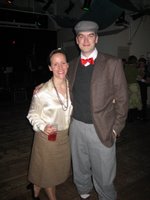 you to enjoy!


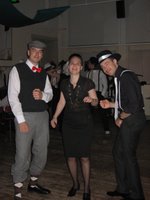
 you to enjoy!

Tuesday, May 16, 2006
Eavesdropping
There's a great new Swedish site with things people have overheard on the tube, at work/school or when out and about, Tjuvlyssnat (inspired by Overheard in New York). Unfortunately it's only in Swedish but I'll treat you to a sample:
On the Stockholm tube
High school girl #1: I can't wait to the summer holidays, I'm going to Greece again
High school girl #2: Oohh, nice, I would also like to do that, I have never been there. By the way, Greece is not in Europe, is it?!
High school girl 1 #1: Yes, it is.
High school girl #2: No, I'm quite sure it isn't.
High school girl #1: (irritated): Yes, I know it is, they had euros there.. and you haven't been there. So I know I'm right!
High school girl #2: Okay, but it wasn't in Europe before they joined the EU at least.
High school girl #1: No, that's probably true. But no country was.
On the Stockholm tube
High school girl #1: I can't wait to the summer holidays, I'm going to Greece again
High school girl #2: Oohh, nice, I would also like to do that, I have never been there. By the way, Greece is not in Europe, is it?!
High school girl 1 #1: Yes, it is.
High school girl #2: No, I'm quite sure it isn't.
High school girl #1: (irritated): Yes, I know it is, they had euros there.. and you haven't been there. So I know I'm right!
High school girl #2: Okay, but it wasn't in Europe before they joined the EU at least.
High school girl #1: No, that's probably true. But no country was.
Monday, May 15, 2006
Tom Tits Experiments
Despite a name that may lead your thoughts to something else, Tom Tits Experiment is actually Sweden's largest science park and it is located in my hometown Södertälje. Over the weekend Tom Tits won the Micheletti prize at the European Museum Forum, awarded to the most promising technical or industrial museum. The jury stated Tom Tits as one of Europe's most interesting museums and highlighted the museum's ambition to attempt to explain basic scientific principles to a broad general public.
(The Museum of the Year Award went to Cosmocaixa in Barcelona and Churchill Museum in London received the Council of Europe Award.)
(The Museum of the Year Award went to Cosmocaixa in Barcelona and Churchill Museum in London received the Council of Europe Award.)
Thursday, May 04, 2006
Iraq? Nah, never heard of it
National Geographic reports that young Americans do not where Iraq is. Despite the US having invaded the country twice and having fought a war there for the past three years, a war that features in the news basically every day, two of three or 63 % youths between 18 and 24 could not point out Iraq on a map. Even fewer knew where Israel or Iran are situated. Moreover, and maybe this is the most scary result, only 50 % could locate New York...
And these are the people that will run that country in the future...
And these are the people that will run that country in the future...
Easter Bunnies

It's long overdue but here's the picture of Marianne (right) and me when we met up at in Brussels at Easter, which I promised her I would post.
Thursday, April 20, 2006
The Society for Threats to Western (American) Thinking
Posted in the St Antony's college (Oxford) JCR (Junior Common Room) newsletter:
Society for Threats to Western (American) Thinking – Monday April 24
The Society for Threats to Western (American) Thinking is proud to announce a special screening of “The Rock” (1996). Monday 24 April 20:00 in the CCR.
Dear friends,
As Trinity Term opens for business and we all get down to the serious regime of examinations, theses, jobs, or procrastination it is - above all - a time for reflection. We have come a long way since SARS and, in the spirit of reflection, it is time we redefine the paradigm surrounding terrorism. Once upon a time we actually UNDERSTOOD this debate, however, as global events conspired against us, academics had to ruin it for everyone with lecture series, books, articles, journals and laborious debates. Through the infinite glory of Hollywood we will engage and defeat this tangental thinking.
The Rock delves into the disgruntled mind of the military machine, threats from deadly biological agents, and a man's search for justice in the face of statist domination. Set in San Fransico and Alcatraz the subtle comparison between liberal freedom and state oppression.
Starring: Connery S., Cage N. and Harris E.
Director: Bay M.
Producer: Bruckheimer J.I
t is time to reclaim the knowledge we have lost. Join us. Threats to Western (American) Thinking is a strategic think-tank, operating from Oxford, dedicated to simplifying debates into soundbite analysis. We aim to destroy subtle discussions with crass generalisations, simplisticanalysis, and overblown PR.
Society for Threats to Western (American) Thinking – Monday April 24
The Society for Threats to Western (American) Thinking is proud to announce a special screening of “The Rock” (1996). Monday 24 April 20:00 in the CCR.
Dear friends,
As Trinity Term opens for business and we all get down to the serious regime of examinations, theses, jobs, or procrastination it is - above all - a time for reflection. We have come a long way since SARS and, in the spirit of reflection, it is time we redefine the paradigm surrounding terrorism. Once upon a time we actually UNDERSTOOD this debate, however, as global events conspired against us, academics had to ruin it for everyone with lecture series, books, articles, journals and laborious debates. Through the infinite glory of Hollywood we will engage and defeat this tangental thinking.
The Rock delves into the disgruntled mind of the military machine, threats from deadly biological agents, and a man's search for justice in the face of statist domination. Set in San Fransico and Alcatraz the subtle comparison between liberal freedom and state oppression.
Starring: Connery S., Cage N. and Harris E.
Director: Bay M.
Producer: Bruckheimer J.I
t is time to reclaim the knowledge we have lost. Join us. Threats to Western (American) Thinking is a strategic think-tank, operating from Oxford, dedicated to simplifying debates into soundbite analysis. We aim to destroy subtle discussions with crass generalisations, simplisticanalysis, and overblown PR.
Monday, April 10, 2006
Royal Stats
In honour of Queen Elizabeth's 80th birthday on 21 April (though officially celebrated in June), the Royal Court has published 80 more or less essential facts about the British Head of State. A selection of her "accomplishments":
- Has modelled for 139 official portraits (even a hologram one)
- Inaugurated 25 ships and 15 bridges
- Sent her first e-mail from an army base in 1976
- Treated her staff to 78,000 Christmas puddings
- Has sent 280,000 telegrams to couples celebrating diamond their anniversary
- Travelled on the London tube for the first time in 1939 (perhaps the only time?)
Perhaps telling of her age and her early succession to the throne; there have been ten British PMs and ten American presidents as well as six Archbishops of Canterbury during her reign.
Monday, April 03, 2006
Kid Fun
You can learn a lot from spending the day with a six-year-old:
- Kids get pretty cranky when they haven't eaten for a while (don't let the kid at the table next to yours stare too much at your kid before he or she has a stabilised blood sugar level)
- Kids talk (and laugh) all through the film while at the cinema (at least when seeing Ice Age 2)
- Kids can eat a huge box of popcorn and drink a supersize soda just after having had lunch (okay, I helped but still)
- Not all kids like spaghetti and meat sauce - at least one Swedish girl wanted black pudding (or pancakes - more normal) for dinner on a Saturday
- McDonald's face paint itches a lot and needs to come off five minutes from home, not a minute later
- Six-year-olds can be surprisingly good at sudoku
- Three bedtime stories and two sudokus later the kid is still not tired ("I'm not tired at all") - as soon as she's allowed to sleep on the sofa in the living room, she's out in three seconds
- It's good to have a few household chores to do as an excuse to get out of playing a fifth boardgame in an hour
- Six-year-olds are already familiar with the local slang
Wednesday, March 22, 2006
On the Rocks
"You have to be pretty drunk to want to sleep here."
Ryszard Kapuściński, literary journalist visiting the Ice Hotel in Jukkasjärvi in the very north of Sweden. He felt the hotel's beds were a bit too chilly for his taste.
Ryszard Kapuściński, literary journalist visiting the Ice Hotel in Jukkasjärvi in the very north of Sweden. He felt the hotel's beds were a bit too chilly for his taste.
Sunday, March 19, 2006
Vanity
Would you do it?
Top Five Female Ops
Top Five Female Ops
- Breast surgery. Resizing or reshaping under full anesthetic; 1 or 2 nights in hospital, stitches out in 7-14 days
- Rhinoplasty. Nose reshaping, needs an overnight stay and 7-10 days for the swelling to subside
- Liposuction. Fat removal under local anesthetic takes 1-2 hours; anoterh week or two for the area to heal
- Blepharoplasty. Excess tissue around the eye is surgically removed; stitches removed in 3-7 days
- Abdominoplasty. Surgery to remove excess skin and fat from the belly; needs 2 weeks off work and lots of bed rest
Top Five Male Ops
- Rhinoplasty. Nose reshaping is the most popular op
- Liposuction. To reduce breast size or get a flatter belly
- Blepharoplasty. Men also dislike saggy, baggy eyes and laugh lines
- Otoplasty. Ear reshaping by removing skin and cartilage and restitching into place. In bandages for a week
- Penis enlargement. A small incision at the base can extend flaccid size by about 2,5 cm; body-fat cells can be implanted to increase girth. Expect a week off work and no heavy lifting for a month
* Source: Harley Medical Group / Time
Thursday, March 16, 2006
The right to own a pet
You might have seen this being reported the other week...
Americans know more about Simpsons than about their basic rights and freedoms
McCormick Tribune Freedom Museum in Chicago is a new museum aimed at informing the American public about the Constitution. The museum did a survey of Americans' knowledge of their basic rights and freedoms and found that:
Americans know more about Simpsons than about their basic rights and freedoms
McCormick Tribune Freedom Museum in Chicago is a new museum aimed at informing the American public about the Constitution. The museum did a survey of Americans' knowledge of their basic rights and freedoms and found that:
- 28 % were able to list two out of five basic freedoms in the First Amendment
- 69 % knew that freedom of speech is one of the five freedoms
- 24 % knew about freedom of religion
- 11 % were aware of freedom of the press
- 10 % were familiar with the freedom of assembly
- only 1 % knew about their right to appeal
This can be compared with the fact that 52 % could name at least two members of the Simpson family.
Another finding of the survey is that many Americans think they have constitutional rights that are not found in the Constitution:
- 1/5 thought the right to own a pet was part of the First Amendment
- As many believed the right to drive a car was in the same amendment (even though the car was invented a century after the establishment of the Constitution
Thursday, March 09, 2006
If only it was that easy!
Italian PM Berlusconi has advised his country's poor to make more money. Italy's richest man apparently started his business by picking up paper off the streets and crumpled them to little balls that he sold to people who used them to light their stoves. And when someone gave the young Berlusconi a camera he started taking pictures at funerals and weddings.
All good ideas...hm...unsurprisingly Berlusconi's popularity is falling as a result of his government's difficulties to get the Italian economy going. The latest opinion polls show that Berlusconi's centre-right alliance will lose to former Commission President Prodi's centre-left bloc - I hope so!
All good ideas...hm...unsurprisingly Berlusconi's popularity is falling as a result of his government's difficulties to get the Italian economy going. The latest opinion polls show that Berlusconi's centre-right alliance will lose to former Commission President Prodi's centre-left bloc - I hope so!
Monday, March 06, 2006
Petition against Trafficking during the Football World Cup
With International Women's Day coming up on Wednesday I want to highlight a very important fight.
A petition against trafficking during the Football World Cup in Germany in June.
As prostitution is legal in Germany and plans are under way to set up mobile brothels, it is very likely that trafficking of women and forced prostitution will significantly increase during the event.
Let's help protect women from such exploitation.
A petition against trafficking during the Football World Cup in Germany in June.
As prostitution is legal in Germany and plans are under way to set up mobile brothels, it is very likely that trafficking of women and forced prostitution will significantly increase during the event.
Let's help protect women from such exploitation.
Friday, March 03, 2006
Olof Palme
I wanted to blog about Olof Palme already on February 28 (the anniversary of his murder) but haven't gotten around to it until today. But instead of writing about him myself I will link to tributes from my fellow bloggers:
Olof Palme...and Bruce Springsteen
En märklig känsla av vemod (Swedish)
And a news article.
For those of you who need an introduction, here's his life (and death).
I was 10 when Palme was murdered. Having grown up in a Social Democratic home I was already very familiar with who he was and with his politics. And it's obviously not every day a country's Prime Minister is murdered (though sadly it happened in Sweden yet again in 2003 when Foreign Minister Anna Lindh was knifed down; fortunately that case has been solved) so it's one of those things you remember forever. I had spent the night at my grandparents' and turned on the radio in the morning to listen to a radio play. We couldn't understand how the writers could joke about such a thing, before it started to sink in that it had actually happened. I remember that my grandmother cried but I don't think I did. I also remember that they cancelled all TV shows and just played sad music on TV all day. I will also always associate Palme's murder with getting my ears pierced. I hadn't had it done that very day but two days earlier and I guess my ears were still hurting. Weird how one's memory works.
Olof Palme...and Bruce Springsteen
En märklig känsla av vemod (Swedish)
And a news article.
For those of you who need an introduction, here's his life (and death).
I was 10 when Palme was murdered. Having grown up in a Social Democratic home I was already very familiar with who he was and with his politics. And it's obviously not every day a country's Prime Minister is murdered (though sadly it happened in Sweden yet again in 2003 when Foreign Minister Anna Lindh was knifed down; fortunately that case has been solved) so it's one of those things you remember forever. I had spent the night at my grandparents' and turned on the radio in the morning to listen to a radio play. We couldn't understand how the writers could joke about such a thing, before it started to sink in that it had actually happened. I remember that my grandmother cried but I don't think I did. I also remember that they cancelled all TV shows and just played sad music on TV all day. I will also always associate Palme's murder with getting my ears pierced. I hadn't had it done that very day but two days earlier and I guess my ears were still hurting. Weird how one's memory works.
Monday, February 27, 2006
Olympic Success
Sweden had its best Winter Olympics ever in Turin! We finished 6 in the "medal league", after:
1. Germany 11-12-6=29
2. USA 9-9-7=25
3. Austria 9-7-7=23
4. Russia 8-6-8=22
5. Canada 7-10-7=24
6. SWEDEN 7-2-5=14
7... R.o.W
Most Swedes would say that winning the Gold in ice-hockey was the best, but I'm the most excited - and proud - about the women's curling team who actually have to work for a living (e.g. one team member is a consultant, another an accountant) and train in their spare time. A reality quite far from the luxury life of the ice-hockey players who are almost all professionals playing in the NHL. The curling team even had to finance part of the trip themselves. Of course, the ice-hockey players have worked hard to get where they are today, but it doesn't make them bigger stars or their gold worth more than the curling ladies' golden medal.
1. Germany 11-12-6=29
2. USA 9-9-7=25
3. Austria 9-7-7=23
4. Russia 8-6-8=22
5. Canada 7-10-7=24
6. SWEDEN 7-2-5=14
7... R.o.W
Most Swedes would say that winning the Gold in ice-hockey was the best, but I'm the most excited - and proud - about the women's curling team who actually have to work for a living (e.g. one team member is a consultant, another an accountant) and train in their spare time. A reality quite far from the luxury life of the ice-hockey players who are almost all professionals playing in the NHL. The curling team even had to finance part of the trip themselves. Of course, the ice-hockey players have worked hard to get where they are today, but it doesn't make them bigger stars or their gold worth more than the curling ladies' golden medal.
Wednesday, February 22, 2006
Congestion Charges Update
I wrote earlier about the congestion charges introduced in the centre of Stockholm at the beginning of the year. I am very pleaset to tell you that so far they have been a huge success! Such a success that the political debate has if not died out but almost disappeared. The parties that were against charges (or "tax" as they call it) are still against (though they were the ones that had launched the idea in the first place, as I mentioned in my previous posting), but they are not as vocal about it in the fear of (I think) alienating voters.
The results so far:
But so far so good! I really hope the continuous success of the trial period leads to Stockholmers voting for a permanent (or as long as congestion and the environment so require) introduction of congestion charges!
The results so far:
- Substantial decrease in congestion on the streets of Stockholm - halving of travel times in rush hour and buses having to hold for a minute at bus stops not to get ahead of their timetable
- 25 % decrease in traffic on weekdays
- No significant increase in traffic on ringroads (e.g. Essingeleden)
- 40,000 more people commuting by public transportation, without any major problems for SL
- Well-functioning technical and administrative system and not total chaos as critics feared
But so far so good! I really hope the continuous success of the trial period leads to Stockholmers voting for a permanent (or as long as congestion and the environment so require) introduction of congestion charges!
Monday, February 20, 2006
Good Point
This New York Times article about the film Brokeback Mountain makes an excellent point regarding the belief of many right-wing Christians in the U.S. that homosexuality is essentially a disease or a phase that one can recover from.
"If anyone believes that gay men can actually become ex-gay men, I have just one question for you: Would you want your daughter to marry one?"
"If anyone believes that gay men can actually become ex-gay men, I have just one question for you: Would you want your daughter to marry one?"
Friday, February 17, 2006
One Step Back for the Japanese Monarchy
Earlier this week Japan announced that they are scrapping the plans to change the rules of succession. Without a male heir to the throne - the Crown Prince has only one child, Princess Aiko, and his brother, Prince Akishino, has two daughters (Princess Sayako married a "commoner" and is out) - the Japanese monarchy will end with the present Crown Prince unless Japan allows women to succeed the throne. Reform was under way until it was announced last week that Prince Akishino and his wife are expecting again. The sex of the baby is not known yet but everyone is hoping for a boy.
Suits them right if it's another girl!
Conservatives in Japan also argue that since women are closely associated with blood through menstruation and childbirth, woman cannot ascend the throne since blood is strictly forbidden in sacred places.
Sounds like something Aristotle (or was it Plato?) would have said, who believed that a woman's emotional life and her lack of control over her feelings made her blood boil, forcing her to let it out once a month...
Suits them right if it's another girl!
Conservatives in Japan also argue that since women are closely associated with blood through menstruation and childbirth, woman cannot ascend the throne since blood is strictly forbidden in sacred places.
Sounds like something Aristotle (or was it Plato?) would have said, who believed that a woman's emotional life and her lack of control over her feelings made her blood boil, forcing her to let it out once a month...
Thursday, February 16, 2006
Islam on the Outskirts of the Welfare State
...is an excellent and very interesting article about Muslims in Sweden in the New York Times, written by Christopher Caldwell. It's long but really worth while reading.
Tuesday, February 14, 2006
Poem for my Valentine
En varm kittlande känsla
Jag glömmer allt
Tänker inte
Svävar
Dina ögon ler, skrattar
De tycker om mig
Jag blundar
Flyter
Ett leende, en hand
Jag faller handlöst
Tycker om dig
Lyfter
Jag glömmer allt
Tänker inte
Svävar
Dina ögon ler, skrattar
De tycker om mig
Jag blundar
Flyter
Ett leende, en hand
Jag faller handlöst
Tycker om dig
Lyfter
Monday, February 13, 2006
Habits and Oddities
I've been tagged by Natalie. The task this time is to make a list of five weird habits or pecularities and then challenge five other bloggers to do the same and continue the chain. I have to include these short rules (and here they are) and list who I challenge at the bottom of the post. I also need to inform them on their blogs that they've been tagged!
Okay, here goes:
1. (Dis)organised?
I've always felt that I'm very organised and orderly, and in a way I am. I have a very good memory and I remember a lot of facts and details. Most people see me as very organised, especially at work, but at home I have lots of piles of papers and post laying around. My flat is always clean but it can be a bit messy and I don't really mind. At the same time I like to keep the books on my bookshelf in alphabetic order, like the blogs on the right, so while I'm a bit messy I'm also a control freak if that's possible.
2. Saver-spender
Like Natalie I would say that I'm a saver if I had to choose between saving and spendthrift. But really, I spend most of my salary every month. I can't help myself! Sure, I'm not extravagant; on the contrary, I rather go to H&M than Gucci, but I do spend a lot on clothes, books, trips, etc. Actually, I probably don't go to Gucci because that would entail having to save for a while in order to spend. However, lately I've been pretty good, joining a private pension saving scheme and buying stuff for the flat that were needed.
3. Don't ask me about proverbs!
I have a habit of using slang and I don't like it. Swedish words I use too often are "ba" and "liksom" and in English I say "like" a lot although I'm getting better. One of my colleagues at my new job is so well-articulated and I really wish I were like her. I hardly curse at all so that's good. My mum always told me that swearing is a sign of bad vocabulary and that really stuck to me.
4. TV freak
I follow too many TV series. No, not docu soaps because I absolutely loathe them! I'm talking about Lost, West Wing, Desperate Housewives, O.C., Six Feet Under, CIC... and then there are all the sitcoms and Swedish shows... Good thing I'm pretty good at multi-tasking and can zip channels when three shows are on at the same time at three different stations.
5. So perfect
My last bad habit must be that I think I'm so perfect that I cannot think of a fifth one! ;)
Okay, I challenge Marianne, Nonna, Marina (will all five have to do with a certain perfume addiction?), Nina and Ester!
Okay, here goes:
1. (Dis)organised?
I've always felt that I'm very organised and orderly, and in a way I am. I have a very good memory and I remember a lot of facts and details. Most people see me as very organised, especially at work, but at home I have lots of piles of papers and post laying around. My flat is always clean but it can be a bit messy and I don't really mind. At the same time I like to keep the books on my bookshelf in alphabetic order, like the blogs on the right, so while I'm a bit messy I'm also a control freak if that's possible.
2. Saver-spender
Like Natalie I would say that I'm a saver if I had to choose between saving and spendthrift. But really, I spend most of my salary every month. I can't help myself! Sure, I'm not extravagant; on the contrary, I rather go to H&M than Gucci, but I do spend a lot on clothes, books, trips, etc. Actually, I probably don't go to Gucci because that would entail having to save for a while in order to spend. However, lately I've been pretty good, joining a private pension saving scheme and buying stuff for the flat that were needed.
3. Don't ask me about proverbs!
I have a habit of using slang and I don't like it. Swedish words I use too often are "ba" and "liksom" and in English I say "like" a lot although I'm getting better. One of my colleagues at my new job is so well-articulated and I really wish I were like her. I hardly curse at all so that's good. My mum always told me that swearing is a sign of bad vocabulary and that really stuck to me.
4. TV freak
I follow too many TV series. No, not docu soaps because I absolutely loathe them! I'm talking about Lost, West Wing, Desperate Housewives, O.C., Six Feet Under, CIC... and then there are all the sitcoms and Swedish shows... Good thing I'm pretty good at multi-tasking and can zip channels when three shows are on at the same time at three different stations.
5. So perfect
My last bad habit must be that I think I'm so perfect that I cannot think of a fifth one! ;)
Okay, I challenge Marianne, Nonna, Marina (will all five have to do with a certain perfume addiction?), Nina and Ester!
Wednesday, February 08, 2006
Social Democratic Sweden (and Eric Sundström)
A fellow Social Democrat who I have linked to in my blogs list, Eric Sundström, is excellent at highlighting why most Swedes continue to vote for the Social Democrats (sure, the opposition is leading - or tied - in the polls at the moment but there are still seven months to the election). See his latest post about Sweden's new goal to become the world's first oil-free economy (by 2020).
See also an example of Eric's excellent writing, about the Vaxholm (Laval) conflict) relating to the EU's Service Directive.
See also an example of Eric's excellent writing, about the Vaxholm (Laval) conflict) relating to the EU's Service Directive.
Saturday, February 04, 2006
Having difficulties choosing which book to read next?
Don't worry, there's help! www.whichbook.net lets you put in a few values for what you want from a book and then generates a list for you. Don't forget to move the yellow arrows towards the degree of [value] that you prefer!
Selecting funny, unpredictable, larger than life and unusual generated, among other books:
John Dory
By John Murray
An offbeat tale with some hilarious accounts of the narrator's schooldays; his ongoing war with his teacher, and his scrapes with his friend, Squinty Bar Radish. Underlying the reminiscences is a spiritual quest for meaning, and we are left to decide how far George Singer's enlightenment, through his encounter with the fish, has led him.
It also allows you to choose characters, plots and settings.
So my fellow book-a-holics out there - make your choice!
Selecting funny, unpredictable, larger than life and unusual generated, among other books:
John Dory
By John Murray
An offbeat tale with some hilarious accounts of the narrator's schooldays; his ongoing war with his teacher, and his scrapes with his friend, Squinty Bar Radish. Underlying the reminiscences is a spiritual quest for meaning, and we are left to decide how far George Singer's enlightenment, through his encounter with the fish, has led him.
It also allows you to choose characters, plots and settings.
So my fellow book-a-holics out there - make your choice!
Monday, January 30, 2006
Interesting stats
67 - Average number of children between the ages of 7 and 15 who visit British casualty wards each weekend with broken bones
55 % - Percentage of average dropped on weekends after the two most recent Harry Potter were released
55 % - Percentage of average dropped on weekends after the two most recent Harry Potter were released
Thursday, January 26, 2006
Know your Stockholm
Random facts about the most beautiful capital in the world:
* Built on 14 islands connected by 52 bridges
* The archipelago has 24,000 islands, rocks and skerries
* 77 nationalities presented
* 70,000 people within the city every year (out of 1 million inhabitants; 2 million with suburbs)
* 20,000 people move to Stockholm every year
* 63 churches
* Has the world's first and only national city park
* The city of Stockholm employs 55,000
* 2,500 restaurants
* Stockholmers and Swedes are the second greatest consumers of coffee
* The underground is the world's longest art exhibition
* The City Hall organ is the largest one in Northern Europe with 10,000 pipes
* 106 hotels and youth hostels
* Only major city where hot-air balloon traffic is allowed over the centre
* The tallest building is Kaknästornet, 155 m
* Has more theatres than any other European city
* No downtown water is polluted, allowing for fishing and swimming
* The city seal, St Erik, from 1376, is the world's oldest
* 70,000 pupils attend school; 25,000 pre-school
* Stockholmers and Swedes buy more tulips than anywhere in the world
* The Globe is the world's largest spherical arena
* Regent Birger Jarl founded Stockholm in 1252
* The oldest buildings are Storkyrkan and Riddarholmskyrkan, both dating back to the 13th century
* 8 daily newspapers are published here
* Has 42 public libraries
* Stockholmers and Swedes are the leading consumers of bananas in the world
What about that?!
* Built on 14 islands connected by 52 bridges
* The archipelago has 24,000 islands, rocks and skerries
* 77 nationalities presented
* 70,000 people within the city every year (out of 1 million inhabitants; 2 million with suburbs)
* 20,000 people move to Stockholm every year
* 63 churches
* Has the world's first and only national city park
* The city of Stockholm employs 55,000
* 2,500 restaurants
* Stockholmers and Swedes are the second greatest consumers of coffee
* The underground is the world's longest art exhibition
* The City Hall organ is the largest one in Northern Europe with 10,000 pipes
* 106 hotels and youth hostels
* Only major city where hot-air balloon traffic is allowed over the centre
* The tallest building is Kaknästornet, 155 m
* Has more theatres than any other European city
* No downtown water is polluted, allowing for fishing and swimming
* The city seal, St Erik, from 1376, is the world's oldest
* 70,000 pupils attend school; 25,000 pre-school
* Stockholmers and Swedes buy more tulips than anywhere in the world
* The Globe is the world's largest spherical arena
* Regent Birger Jarl founded Stockholm in 1252
* The oldest buildings are Storkyrkan and Riddarholmskyrkan, both dating back to the 13th century
* 8 daily newspapers are published here
* Has 42 public libraries
* Stockholmers and Swedes are the leading consumers of bananas in the world
What about that?!
Sunday, January 08, 2006
It's a Dangerous World - for Half of the Population
Despite reports that the world is as peaceful as it's ever been, this is certainly not true for most women around the globe.
When looking at the female half of the global population, a depressing and bleak picture presents itself. According to the Geneva Centre for the Democratic Control of the Armed Forces, the world is still very violent, and not just during times of war. Men still fight (and die in) wars but according to the Centre's new report "Women in an Insecure World", women and girls are subject to a 'hidden gendercide'. The report refers to everything from infanticide to rape, dowry related deaths, sex trafficking, rape and domestic violence.
The Centre estimates that up to 200 million women are demographically "missing", as a result of abortion and infanticide of girls; lack of food and medical attention; honour-killings and dowry deaths; and domestic violence in general. This is equivalent to 1.5-3 m women and girls perishing a year. In fact, females between the ages of 15 and 44 are more likely to be killed by men than through cancer, malaria, traffic accidents or general warfare.
So, no, the world is not a peaceful place, not even for women in the Western world, though it's obviously far more dangerous to have had to misfortune (from this perspective) of being born in Africa or Asia.
When looking at the female half of the global population, a depressing and bleak picture presents itself. According to the Geneva Centre for the Democratic Control of the Armed Forces, the world is still very violent, and not just during times of war. Men still fight (and die in) wars but according to the Centre's new report "Women in an Insecure World", women and girls are subject to a 'hidden gendercide'. The report refers to everything from infanticide to rape, dowry related deaths, sex trafficking, rape and domestic violence.
The Centre estimates that up to 200 million women are demographically "missing", as a result of abortion and infanticide of girls; lack of food and medical attention; honour-killings and dowry deaths; and domestic violence in general. This is equivalent to 1.5-3 m women and girls perishing a year. In fact, females between the ages of 15 and 44 are more likely to be killed by men than through cancer, malaria, traffic accidents or general warfare.
So, no, the world is not a peaceful place, not even for women in the Western world, though it's obviously far more dangerous to have had to misfortune (from this perspective) of being born in Africa or Asia.
Tuesday, January 03, 2006
One for the Environment
Today at 6.30 am Stockholm introduced congestion charges to limit the traffic to and from the centre of the city. I think it's a great idea! It's just a try-out period for six months, after which a referendum will take place, but I hope the charges are here to stay, considering they are needed and the investment made in the system, etc. Unfortunately it seems that most people do not share my enthusiasm for environmental tolls, so unless the trial is very successful, the vote will be negative... I will keep you posted.
The first day was a hit though! Apparently the traffic in and out of the central areas during the morning rush hour (6-10.15 am) was reduced by 16 %. However, there was a large, albeit not equal, increase of traffic (11 %) on Essingeleden, which is the main highway outside the congestion zone. Essingeleden is already heavily trafficated so this could potentially be a problem, but I'm hoping that it will cope, and also that more people will use public transport.
The computer system seems to have coped with the first day too. Those sceptical about the initiative are arguing that "it's so complicated!". What is so complicated?! You either use what they call a transponder, a sort of Easy pass, which bills you automatically, or it registers your license plate and sends you a bill which must be paid in 5 days. Bidding at eBay is more complicated! Most people would say "yes" to the question "do you want to save the environment?", but when it comes down to actually changing one's behaviour, people have so many excuses.
Sure, one could argue that this is just a small step and doesn't save the environment at all, or that it's the wrong method, or that we already pay taxes to use our roads, etc., but the fact is that we need to do something to alleviate both the problem of congestion, and its effects on the environment. I get especially annoyed with the Swedish Conservative Party, Moderaterna, which actually started the process with tolls back in the late 70s and supported them as part of the Dennis deal (transport plan; only part of the deal materialised), but today demonstrated against congestion charges together with the Swedish Automobile Association.
If you want to read more about the congestion charges, with a bit of humour thrown in, visit the Swedish Society for Nature Conservation's special site: Smit från trängselskatten (available in Swedish only unfortunately) where you can get tips on how to avoid the charges or send in your best slogan for the charges (and chance at winning a scooter!)
The first day was a hit though! Apparently the traffic in and out of the central areas during the morning rush hour (6-10.15 am) was reduced by 16 %. However, there was a large, albeit not equal, increase of traffic (11 %) on Essingeleden, which is the main highway outside the congestion zone. Essingeleden is already heavily trafficated so this could potentially be a problem, but I'm hoping that it will cope, and also that more people will use public transport.
The computer system seems to have coped with the first day too. Those sceptical about the initiative are arguing that "it's so complicated!". What is so complicated?! You either use what they call a transponder, a sort of Easy pass, which bills you automatically, or it registers your license plate and sends you a bill which must be paid in 5 days. Bidding at eBay is more complicated! Most people would say "yes" to the question "do you want to save the environment?", but when it comes down to actually changing one's behaviour, people have so many excuses.
Sure, one could argue that this is just a small step and doesn't save the environment at all, or that it's the wrong method, or that we already pay taxes to use our roads, etc., but the fact is that we need to do something to alleviate both the problem of congestion, and its effects on the environment. I get especially annoyed with the Swedish Conservative Party, Moderaterna, which actually started the process with tolls back in the late 70s and supported them as part of the Dennis deal (transport plan; only part of the deal materialised), but today demonstrated against congestion charges together with the Swedish Automobile Association.
If you want to read more about the congestion charges, with a bit of humour thrown in, visit the Swedish Society for Nature Conservation's special site: Smit från trängselskatten (available in Swedish only unfortunately) where you can get tips on how to avoid the charges or send in your best slogan for the charges (and chance at winning a scooter!)
Monday, January 02, 2006
Backward Progress
From the New York Times on December 30th:
FORBIDDEN VACCINE Ever year, about 500,000 women throughout the world develop cervical cancer. In the United States alone, the disease kills about 3,700 women annually. This year, scientists developed a vaccine against human papillomavirus, a sexually transmitted disease that is the primary cause of cervical cancer. The vaccine produced 100 percent immunity in the 6,000 women who received it as part of a multinational trial. As soon as the vaccine is licensed, some health officials say, it should be administered to all girls at age 12. But the Family Research Council and other social conservative groups vowed to fight that plan, even though it could virtually eliminate cervical cancer. Vaccinating girls against a sexually transmitted disease, they say, would reduce their incentive to abstain from premarital sex.
Arrgh! This is just one of many areas where the US seems to be going backwards.
FORBIDDEN VACCINE Ever year, about 500,000 women throughout the world develop cervical cancer. In the United States alone, the disease kills about 3,700 women annually. This year, scientists developed a vaccine against human papillomavirus, a sexually transmitted disease that is the primary cause of cervical cancer. The vaccine produced 100 percent immunity in the 6,000 women who received it as part of a multinational trial. As soon as the vaccine is licensed, some health officials say, it should be administered to all girls at age 12. But the Family Research Council and other social conservative groups vowed to fight that plan, even though it could virtually eliminate cervical cancer. Vaccinating girls against a sexually transmitted disease, they say, would reduce their incentive to abstain from premarital sex.
Arrgh! This is just one of many areas where the US seems to be going backwards.
Friday, December 30, 2005
Dubya's Holiday Greeting
Click on 2-0-5 George Bush's Year in Review! Don't forget to turn on your sound!
Wednesday, December 28, 2005
Goodbye Siesta
At a time where I'm on full-time siesta (changing jobs; taking out weeks of saved vacation), Spain has (finally) decided to scrap the siesta. A long overdue decision, I'll say. My friend Céline has often complained about being forced to take siesta while working in a Barcelona suburb where there's nothing to do and too far away for being able to return home for the break.
But from this week all Spanish government employees (actually, since Céline works in the private sector, this might not actually solve her problem) will take one hour lunch, as is customary in most other European countries. And between 12 noon and 1 pm, not after two in the afternoon. The new legislation will allow employees to return home by six pm instead of eight or nine, and give them more time for family and friends.
One of the main reasons for the change is that is that the traditional siesta has not exactly helped Spain's competitiveness. Spaniards work more than most countries in the world - tenth place when it comes to working hours - but their type of "work ethic" does not translate into productivity or efficiency. In addition, Spanish workers sleep 40 minutes less every night compared to the average European. A more urgent rationale is the fact that in a globalised world, Spain cannot keep on closing offices and switchboards for three hours in the afternoon, when the rest of the world stays open. Shops adopted new hours already years ago.
So this should be a welcome change for Spain as an economy and for the Spanish people.
But from this week all Spanish government employees (actually, since Céline works in the private sector, this might not actually solve her problem) will take one hour lunch, as is customary in most other European countries. And between 12 noon and 1 pm, not after two in the afternoon. The new legislation will allow employees to return home by six pm instead of eight or nine, and give them more time for family and friends.
One of the main reasons for the change is that is that the traditional siesta has not exactly helped Spain's competitiveness. Spaniards work more than most countries in the world - tenth place when it comes to working hours - but their type of "work ethic" does not translate into productivity or efficiency. In addition, Spanish workers sleep 40 minutes less every night compared to the average European. A more urgent rationale is the fact that in a globalised world, Spain cannot keep on closing offices and switchboards for three hours in the afternoon, when the rest of the world stays open. Shops adopted new hours already years ago.
So this should be a welcome change for Spain as an economy and for the Spanish people.
Tuesday, December 27, 2005
Holiday Greetings
A bit late... but Merry Christmas! Or the more p.c. Season's Greetings or Happy Holidays. Or God Jul in Swedish. And Happy New Year!
P.S. Will try to post some pictures from Canada. I haven't really made a habit of posting photos but perhaps it should be a new year's resolution for my blog.
P.S. Will try to post some pictures from Canada. I haven't really made a habit of posting photos but perhaps it should be a new year's resolution for my blog.
Thursday, December 15, 2005
Toronto
Just a quick post that I'm currently visiting some friends in Toronto, Canada. At the moment it's snowing heavily but hopefully I'll be able to (get home from this Internet cafe and) visit the Shoe Museum and Niagara Falls before I leave on Sunday! So far I've mostly been shopping and hanging out with my friend Helena and her baby girl Ester, plus visited the CN Tower.
Monday, December 05, 2005
Quick fix
According to a new study by the Swedish Ministry of Finance, 82 % of taxes paid are refunded, i.e. benefitting the tax payer him/herself; 45 % even in the same year as it is taxed. How? Through subsidised education, grants, childcare, etc.*
* The study covers Sweden, no data on other countries.
* The study covers Sweden, no data on other countries.
Wednesday, November 30, 2005
Ginger Spice
Yes, I did go to a Spice Girls concert once but that's not what this post is about.
This time of the year, Swedes consume A LOT of ginger thins, or pepparkakor as we call it. We eat them all year around but the holiday season is the peak. Pepparkakor was plentiful already back 1,800 B.C. in Mesopotamia, because they kept long and wasn't attacked by mildew. Roman soldiers used to keep pepparkakor in their rations. In the 15th century nuns in the nunnery at Vadstena baked pepparkakor for medicinal reasons; the spicy and sweet cookies were thought to help with digestion. The Swedish "pepparkaka" refers to old receipes where pepper was one of the medicinal ingredients. Pepper has also been a term used for spices in general.
One of my favourite brand of pepparkakor (except for homemade ones) is Anna's (of course!). Anna's was founded in 1929 by two north Swedes, sisters Anna and Emma Karlsson, who ran a domestic household school and a bakery in Stockholm. The cookies became so popular that the bakery turned into a company and in 1945 the factory was moved to what is now the Stockholm suburbs. 1963 the company was bought by the Mattsson family who still owns it. In 1978 Anna's went abroad and today the company produce over 3,000 tonnes cookies annually, of which 60 % is exported and sold e.g. at IKEAs around the world. In Sweden, Anna's has 45 employees but the cookies are also produced at other locations such as Calgary, Canada, where 500 tonnes cookies come out of the owen.
Swedes are perhaps a bit traditional and prefer the original flavour but in other parts of the world, Anna's has experimented with mint, orange, almond and other flavours. Swedes are more for the combos, such as the original flavour with blue cheese (roquefort or gorgonzola). I know, I didn't believe when I first heard about a few years back, but it's delicious!
This time of the year, Swedes consume A LOT of ginger thins, or pepparkakor as we call it. We eat them all year around but the holiday season is the peak. Pepparkakor was plentiful already back 1,800 B.C. in Mesopotamia, because they kept long and wasn't attacked by mildew. Roman soldiers used to keep pepparkakor in their rations. In the 15th century nuns in the nunnery at Vadstena baked pepparkakor for medicinal reasons; the spicy and sweet cookies were thought to help with digestion. The Swedish "pepparkaka" refers to old receipes where pepper was one of the medicinal ingredients. Pepper has also been a term used for spices in general.
One of my favourite brand of pepparkakor (except for homemade ones) is Anna's (of course!). Anna's was founded in 1929 by two north Swedes, sisters Anna and Emma Karlsson, who ran a domestic household school and a bakery in Stockholm. The cookies became so popular that the bakery turned into a company and in 1945 the factory was moved to what is now the Stockholm suburbs. 1963 the company was bought by the Mattsson family who still owns it. In 1978 Anna's went abroad and today the company produce over 3,000 tonnes cookies annually, of which 60 % is exported and sold e.g. at IKEAs around the world. In Sweden, Anna's has 45 employees but the cookies are also produced at other locations such as Calgary, Canada, where 500 tonnes cookies come out of the owen.
Swedes are perhaps a bit traditional and prefer the original flavour but in other parts of the world, Anna's has experimented with mint, orange, almond and other flavours. Swedes are more for the combos, such as the original flavour with blue cheese (roquefort or gorgonzola). I know, I didn't believe when I first heard about a few years back, but it's delicious!
Tuesday, November 29, 2005
e-Wasteland
Some basic but sad facts of e-waste*:
- 4,000 tonnes of toxic e-waste is discarded in the world every hour, equivalent to the weight of 1,000 e-lephants
- Between 1997 and 2007, experts estimate that there will be more than 500 million obsolete computers in the US alone. That includes 2.87 million tonnes plastics, 717,000 tonnes lead, 1.36 million tonnes cadmium, 862,000 tonnes chromium, and 287 tonnes mercury.
- The Basel Convention on Transboundary Movements of Harzardous Wastes and their Disposal (1994) bans export of all hazardous waste from rich to poor countries for any reason, including recycling. The US, Australia and Canada have failed to ratify the Basel Convention.
- 50-80 % of the e-waste collected for recycling in western US is not recycled domestically, but shipped in containers to destinations such as China
- Imports of e-waste have been illegal in China since 1996, so there is no official figures on how much is coming into the country, but environmental groups and academics estimate that Guiyu alone handles more than a million tonnes of e-waste annually
- In May this year, Greenpeace China tried to shame electronics companies attending a trade show in Beijing by unveiling a 2.7 m high statue in the shape of a wave built using the companies' e-waste collected from Guiyu
- The Computer TakeBack campaign aims to protect the health and well-being of electronic users, workers, and the communities where electronics are produced and discarded, by requiring electronic manufacturers and brand owners to take full responsibility for the life cycle of their products.
Source: Scanorama Magazine, November 2005
*electronic waste
Thursday, November 17, 2005
Teenage Alert
I sometimes check out the blog of an American woman in exile in Skellefteå, which is a town quite far up north in Sweden. She has three children, among them a girl who just turned 9. Last week they headed to the town centre in the afternoon - and by 4 pm it's pretty dark already in Sweden this time of the year. Under the heading "Be afraid... be very afraid", Beverly writes:
"As we were walking from the shopping center to where we had parked the car, Lydia said to me, “I don’t like being in town at night. It’s all dark and scary and the teenagers come. Teenagers come mostly at night, right?”
Hilarious and cute at the same time!
"As we were walking from the shopping center to where we had parked the car, Lydia said to me, “I don’t like being in town at night. It’s all dark and scary and the teenagers come. Teenagers come mostly at night, right?”
Hilarious and cute at the same time!
Wednesday, November 16, 2005
The Asylum Tribunal 2005
On Monday evening I attended a very special event here in Stockholm, the Asylum Tribunal. Based on the historic Russell Tribunal of 1967, the Asylum Tribunal investigated a state's crime against humanity. In 1967, experts and prominent guests gathered in Stockholm to determine whether US warfare in Vietnam broke international law. Now Swedish and international expertise met again in Stockholm, but this time the indicted is Sweden itself. Is the Swedish state breaking Swedish law and international conventions to which we are signatories? According to these laws and conventions people who are fleeing persecution and oppression, torture and other inhumane treatment, have the right to receive protection and residence permit in Sweden. But fewer and fewer are granted asylum or residence.
The procedings were led by qualified jurists who called in experts and witnesses: international law experts, legal and political sciencists, doctors, psychiatrists, etc. A jury consisting of prominent people - among them George Bizos, legendary human rights lawyer from South Africa - gave a final verdict.
The Tribunal tried to answer the questions:
• Is the asylum law being undermined and hollowed out?
• Is the rich Europe - and Sweden - closing its doors to persecuted people?
• Do we want to live in a country and in a world where one of the basic human rights - the right to asylum - is neglected?
Many people in Sweden believe that Sweden is very generous and that we welcome hords of refugees every year but the truth is that never before has Sweden admitted so few asylum seekers. Only 1,45 % of asylum applications were approved last year compared to 45 % in Canada. Moreover, no other country has been convicted by the Committee Against Torture (CAT, the UN organ) so many times (11) as Sweden. Not for torturing people but for sending people back to countries where they risk being tortured.
Needless to say, Sweden was convicted by the Tribunal jury. They have written a number of recommendations for Sweden, which I will post here when they become available.
The procedings were led by qualified jurists who called in experts and witnesses: international law experts, legal and political sciencists, doctors, psychiatrists, etc. A jury consisting of prominent people - among them George Bizos, legendary human rights lawyer from South Africa - gave a final verdict.
The Tribunal tried to answer the questions:
• Is the asylum law being undermined and hollowed out?
• Is the rich Europe - and Sweden - closing its doors to persecuted people?
• Do we want to live in a country and in a world where one of the basic human rights - the right to asylum - is neglected?
Many people in Sweden believe that Sweden is very generous and that we welcome hords of refugees every year but the truth is that never before has Sweden admitted so few asylum seekers. Only 1,45 % of asylum applications were approved last year compared to 45 % in Canada. Moreover, no other country has been convicted by the Committee Against Torture (CAT, the UN organ) so many times (11) as Sweden. Not for torturing people but for sending people back to countries where they risk being tortured.
Needless to say, Sweden was convicted by the Tribunal jury. They have written a number of recommendations for Sweden, which I will post here when they become available.
Wednesday, November 09, 2005
Confession
I'm such a sucker for gossip. Not the office rumour spreading but the whereabouts and activities of the Hollywood crowd and the like. I mentioned Defamer earlier but two of the best sites at the moment are Pink Is the New Blog and Just Jared. Enjoy!
Wednesday, November 02, 2005
Work Ethic: Part One
Yes, I know, I've been a poor blogger lately. I've simply had too much to do, both work-wise and in the evenings. I will tell you in due time. For those of you who are not that busy at work but would like to appear to be, here's a list of tricks to apply in various circumstances at work in order to seem like the busy, diligent bee.
23. Delaying. If your boss comes and asks you for a chat, don’t bounce right away. Delay by saying “I’ll be there as soon as I finish this.”
Advantage: You appear to have integrity and moreover, you buy time to prepare for the meeting.
22. The Jimmy Connors trick. To be tired is human. To doze off at work is bad. The solution is to pretend to pick up paper clips though you’re actually sleeping. Like Jim Connors sort of. Sprinkle paper clips on the floor, lean forward and slumber. If someone comes in you pretend you’re picking.
Advantage: No one notices that you’re tired and sleeping like a baby.
21. The “I do work” trick. Reject phone calls when you’re on your way home on Fridays after lunch. If you get a message, return the call at 18.45 and explain that you’ve been in a telephone conference until now.
Advantage 1: You appear to be sacrificing everything for work.
Advantage 2: The person in question avoids leaving messages coming Fridays.
20. The reading trick. Put your own reading inside e.g. a relevant annual report. Lean back towards a fall and enjoy Hello magazine.
Advantage: You’re seen as a person who keeps his/herself informed.
19. The important telephone call trick. You’re in an open-plan office and a friend calls. Say loudly: “Then I will just collect some material and find a meeting room”. You’re free to chat and gossip for at least 15 minutes.
Advantage: You appear to be an important person who is consulted on important issues.
18. The font 6 trick. Write private emails with text in font size 6 so that people passing by cannot read them. For further smoke screen, keep excel sheets open half-screen.
Advantage: You can write whatever you want, whenever you want.
17. The ”I’m in the game” trick. At the weekly meeting, always express your opinion with authoritative voice early on in the meeting – preferably in general terms that data steer documents and the ball is round.
Advantage: You appear to be in the game.
16. The email trick. Write some general email to co-workers and preset the transmission time so that the emails are portioned out at regular intervals during the day. You’re free to play golf or pick your nails. Transmission time Sunday should be avoided.
Advantage: You seem to have an even and high work capacity.
15. The walk and talk trick. Important job call? Take a walk around the office with the office mobile phone, wave your arms and say loud and clear: “I hear what you’re saying and I understand – but it does not change anything”.
Advantage: You seem to have authority.
14. The offensive walk trick. With high speed, purposefully. When it comes to walking decidedly there only one no-no: you cannot seemed stressed.
Advantage: Make you seem effective and efficient.
13. The mobile at the meeting trick. Ask the other meeting participants if it’s okay that you keep your mobile switched on as you’re expecting an extremely important call. Leave when it rings.
Advantage: Make you seem (more) important.
12. The ”classic”. Or the ”light switched on and coat left behind” trick. To leave the office without turning your light off, without turning off your computer and without taking your coat. Warning: If you use it too often your colleagues might see through it.
Advantage: It looks like you’re still at work although you’re not.
To be continued.
23. Delaying. If your boss comes and asks you for a chat, don’t bounce right away. Delay by saying “I’ll be there as soon as I finish this.”
Advantage: You appear to have integrity and moreover, you buy time to prepare for the meeting.
22. The Jimmy Connors trick. To be tired is human. To doze off at work is bad. The solution is to pretend to pick up paper clips though you’re actually sleeping. Like Jim Connors sort of. Sprinkle paper clips on the floor, lean forward and slumber. If someone comes in you pretend you’re picking.
Advantage: No one notices that you’re tired and sleeping like a baby.
21. The “I do work” trick. Reject phone calls when you’re on your way home on Fridays after lunch. If you get a message, return the call at 18.45 and explain that you’ve been in a telephone conference until now.
Advantage 1: You appear to be sacrificing everything for work.
Advantage 2: The person in question avoids leaving messages coming Fridays.
20. The reading trick. Put your own reading inside e.g. a relevant annual report. Lean back towards a fall and enjoy Hello magazine.
Advantage: You’re seen as a person who keeps his/herself informed.
19. The important telephone call trick. You’re in an open-plan office and a friend calls. Say loudly: “Then I will just collect some material and find a meeting room”. You’re free to chat and gossip for at least 15 minutes.
Advantage: You appear to be an important person who is consulted on important issues.
18. The font 6 trick. Write private emails with text in font size 6 so that people passing by cannot read them. For further smoke screen, keep excel sheets open half-screen.
Advantage: You can write whatever you want, whenever you want.
17. The ”I’m in the game” trick. At the weekly meeting, always express your opinion with authoritative voice early on in the meeting – preferably in general terms that data steer documents and the ball is round.
Advantage: You appear to be in the game.
16. The email trick. Write some general email to co-workers and preset the transmission time so that the emails are portioned out at regular intervals during the day. You’re free to play golf or pick your nails. Transmission time Sunday should be avoided.
Advantage: You seem to have an even and high work capacity.
15. The walk and talk trick. Important job call? Take a walk around the office with the office mobile phone, wave your arms and say loud and clear: “I hear what you’re saying and I understand – but it does not change anything”.
Advantage: You seem to have authority.
14. The offensive walk trick. With high speed, purposefully. When it comes to walking decidedly there only one no-no: you cannot seemed stressed.
Advantage: Make you seem effective and efficient.
13. The mobile at the meeting trick. Ask the other meeting participants if it’s okay that you keep your mobile switched on as you’re expecting an extremely important call. Leave when it rings.
Advantage: Make you seem (more) important.
12. The ”classic”. Or the ”light switched on and coat left behind” trick. To leave the office without turning your light off, without turning off your computer and without taking your coat. Warning: If you use it too often your colleagues might see through it.
Advantage: It looks like you’re still at work although you’re not.
To be continued.
Monday, October 17, 2005
Random Mission
Mission: Write 20 random facts about yourself
Assignment by: Aunty Marianne
Deadline: October 17, 2005, 23:00
1. I had to have two surgeries on my left eye by the time I was 18 months old due to a extra fat tissue on my eyelid. Fortunately, the doctors did a good job and today you can hardly notice it.
2. Continuing on the same theme, I had appendicitis in the summer of 1996 when I was an aupair in Pittsburgh, USA. Fortunately I had good insurance coverage so I didn't have to foot a penny of the $15K bill. I did have some complications though (vein bursting from the IV and loss of feeling in my thigh for almost a year due to a pain shot that hit a nerve) and was told later I could have sued the hospital, but being Swedish the thought didn't even cross my mind.
3. When I was 10 I stepped on a rusty nail that almost went through my foot (same theme). I had to have a tetanus shot and missed my third grade leaving party, but otherwise I was fine. I just have a tiny, almost not noticeable scar today.
4. I played football for seven years (age 9-16) but never got hurt. I don't know if that means I was lucky or that I wasn't a very good player...
5. I tried rugby after quitting football but only lasted one practice. I lasted at least a few weeks when I tried athletics (track-and-field) but that was when I was much younger.
6. I stopped playing football because I couldn't participate in all practices (and then they wouldn't let you play matches) due to a growing political interest and membership in the local Social Democratic youth club in Södertälje (though I was on the barricades with my mum at the May 1 demonstrations already as a toddler).
7. I had a seat on a local council (Södertälje) dealing with disability issues for three years 1994-1997 but had to resign when I moved to Uppsala to study. These particular issues are dear to me since I have a brother who's mentally handicapped (but such a fun guy nonetheless!).
8. I have a degree from Oxford, which my working class self would never have imagined ten years ago. But I didn't have a problem socialising with the likes of Emirate princesses and Chelsea Clinton (my interaction with the latter consisted of giving directions to the "restroom").
9. Otherwise I hardly ever see any celebrities, but when I was living in London I lived in the same street as John Cleese.
10. I used to think Brad Pitt was gorgeous but since this Jolie thing his star has fallen in my sky because I'm definitely on Team Aniston.
11. I just LOVE "Friends"! My friend Kim and I have so much fun watching that show and she's so good at remembering all the lines and bringing them into conversations and situations!
12. Kim (who lives in England) doesn't have any children yet but otherwise so many of my friends are producing babies like on a conveyor belt. They are cute but sometimes I just want to have friends who want to go for a beer or take a trip...
13. When I have children one day, I'm going to have a girl called Isolde, otherwise it's not happening!
14. I have tried Internet dating - in order to find the father to Isolde - and I recommend it! It's fun!
15. I have never purchased anything on eBay. I actually don't think shopping is that fun though I seem to spend money nevertheless.
16. I'm a book-a-holic - the big black hole where my pay check goes - but I don't read as much. They need to sit on my bookshelf for a while to "mature".
17. I'm on the lookout for a Butler's Tray to go with my couch and my book shelves.
18. I want to build a house in American colonial style in Sweden one day.
19. I don't mind paying more than half of my income in taxes. I'm sure it will come back to me one day one way or the other.
20. I love ice cream! In fact, I think I'm going to have some now!
Assignment by: Aunty Marianne
Deadline: October 17, 2005, 23:00
1. I had to have two surgeries on my left eye by the time I was 18 months old due to a extra fat tissue on my eyelid. Fortunately, the doctors did a good job and today you can hardly notice it.
2. Continuing on the same theme, I had appendicitis in the summer of 1996 when I was an aupair in Pittsburgh, USA. Fortunately I had good insurance coverage so I didn't have to foot a penny of the $15K bill. I did have some complications though (vein bursting from the IV and loss of feeling in my thigh for almost a year due to a pain shot that hit a nerve) and was told later I could have sued the hospital, but being Swedish the thought didn't even cross my mind.
3. When I was 10 I stepped on a rusty nail that almost went through my foot (same theme). I had to have a tetanus shot and missed my third grade leaving party, but otherwise I was fine. I just have a tiny, almost not noticeable scar today.
4. I played football for seven years (age 9-16) but never got hurt. I don't know if that means I was lucky or that I wasn't a very good player...
5. I tried rugby after quitting football but only lasted one practice. I lasted at least a few weeks when I tried athletics (track-and-field) but that was when I was much younger.
6. I stopped playing football because I couldn't participate in all practices (and then they wouldn't let you play matches) due to a growing political interest and membership in the local Social Democratic youth club in Södertälje (though I was on the barricades with my mum at the May 1 demonstrations already as a toddler).
7. I had a seat on a local council (Södertälje) dealing with disability issues for three years 1994-1997 but had to resign when I moved to Uppsala to study. These particular issues are dear to me since I have a brother who's mentally handicapped (but such a fun guy nonetheless!).
8. I have a degree from Oxford, which my working class self would never have imagined ten years ago. But I didn't have a problem socialising with the likes of Emirate princesses and Chelsea Clinton (my interaction with the latter consisted of giving directions to the "restroom").
9. Otherwise I hardly ever see any celebrities, but when I was living in London I lived in the same street as John Cleese.
10. I used to think Brad Pitt was gorgeous but since this Jolie thing his star has fallen in my sky because I'm definitely on Team Aniston.
11. I just LOVE "Friends"! My friend Kim and I have so much fun watching that show and she's so good at remembering all the lines and bringing them into conversations and situations!
12. Kim (who lives in England) doesn't have any children yet but otherwise so many of my friends are producing babies like on a conveyor belt. They are cute but sometimes I just want to have friends who want to go for a beer or take a trip...
13. When I have children one day, I'm going to have a girl called Isolde, otherwise it's not happening!
14. I have tried Internet dating - in order to find the father to Isolde - and I recommend it! It's fun!
15. I have never purchased anything on eBay. I actually don't think shopping is that fun though I seem to spend money nevertheless.
16. I'm a book-a-holic - the big black hole where my pay check goes - but I don't read as much. They need to sit on my bookshelf for a while to "mature".
17. I'm on the lookout for a Butler's Tray to go with my couch and my book shelves.
18. I want to build a house in American colonial style in Sweden one day.
19. I don't mind paying more than half of my income in taxes. I'm sure it will come back to me one day one way or the other.
20. I love ice cream! In fact, I think I'm going to have some now!
Saturday, October 15, 2005
Turkishtravel.org
My previous blog about my visit to Turkey this past summer has been published by a travel site called Turkish Travel! Look here.
Tuesday, October 04, 2005
Turkish Delight
When I visited Turkey this summer I promised to blog about it but then didn't actually get around to doing so. But now, with the EU, after delays and late-night mangling, finally having agreed to start membership negotiations with Turkey, it a good time as any.
I visited the town of Marmaris in the southwest of Turkey with a friend for about a week. Marmaris is located in a bay of the Mediterranean with a beautiful marina, below the green, majestic Taurus mountains. Taurus actually continues all the way through Asia and turns into Himalaya. Sultan Süleyman the Great had a fortress built in the 1500s and founded the city. Legend has it that when the Sultan returned home in one of his ships and saw the finished fortress, he shouted "Mimar as!", which means "Hang the architect!". Hence the name Marmaris today.
We spent a lot of time at the beach (it being the main reason for the trip) but with the temperature approaching 40 Celcius degrees, it was nice, and also the plan, to set aside some time for sightseeing outside town. Except for the obligatory Hamam, we took a day-tour to Dalyan and Kaunos, which included a river boat ride passed ancient royal graves carved in a mountain side, a mudbath at an ancient spa location, and a swim at a beach where the Caretta turtle lays her eggs. Another excursion brought us to Pamukkale, with its magnificent white limestone basins, making it one of the natural wonders of the world. On the way to Pamukkale we made a very interesting visit to a rug factory - had I known I would have taken my savings and bought one of the amazing silk rugs!
On the way to these sights we passed through a number of different towns and villages. I must say that I was surprised in both positive and negative ways. I knew Turkey was a very varied country, with Istanbul and other cities quite developed while the majority of the country is mainly rural and undeveloped; however, I wasn't prepared that Marmaris and other cities would feel so much like (especially southern and Eastern) European cities, while travelling through the countryside felt like going back in time to a 1950's Sweden. To take an example: People of all ages were working in the field in very old-fashioned clothes with tools seemingly from the pre-industrial area!
So Turkey has a long way to come but the best road to take is the European highway, even if it has to keep by a speed limit of 5 km an hour and sometimes do a U-turn and make a fresh start. On the way it has a lot of important passengers to pick up: democracy, human rights, a new account of its history, the role of the military, economic development, etc. Luckily it has extra drivers, some a bit reluctant but most of them forthcoming.
I visited the town of Marmaris in the southwest of Turkey with a friend for about a week. Marmaris is located in a bay of the Mediterranean with a beautiful marina, below the green, majestic Taurus mountains. Taurus actually continues all the way through Asia and turns into Himalaya. Sultan Süleyman the Great had a fortress built in the 1500s and founded the city. Legend has it that when the Sultan returned home in one of his ships and saw the finished fortress, he shouted "Mimar as!", which means "Hang the architect!". Hence the name Marmaris today.
We spent a lot of time at the beach (it being the main reason for the trip) but with the temperature approaching 40 Celcius degrees, it was nice, and also the plan, to set aside some time for sightseeing outside town. Except for the obligatory Hamam, we took a day-tour to Dalyan and Kaunos, which included a river boat ride passed ancient royal graves carved in a mountain side, a mudbath at an ancient spa location, and a swim at a beach where the Caretta turtle lays her eggs. Another excursion brought us to Pamukkale, with its magnificent white limestone basins, making it one of the natural wonders of the world. On the way to Pamukkale we made a very interesting visit to a rug factory - had I known I would have taken my savings and bought one of the amazing silk rugs!
On the way to these sights we passed through a number of different towns and villages. I must say that I was surprised in both positive and negative ways. I knew Turkey was a very varied country, with Istanbul and other cities quite developed while the majority of the country is mainly rural and undeveloped; however, I wasn't prepared that Marmaris and other cities would feel so much like (especially southern and Eastern) European cities, while travelling through the countryside felt like going back in time to a 1950's Sweden. To take an example: People of all ages were working in the field in very old-fashioned clothes with tools seemingly from the pre-industrial area!
So Turkey has a long way to come but the best road to take is the European highway, even if it has to keep by a speed limit of 5 km an hour and sometimes do a U-turn and make a fresh start. On the way it has a lot of important passengers to pick up: democracy, human rights, a new account of its history, the role of the military, economic development, etc. Luckily it has extra drivers, some a bit reluctant but most of them forthcoming.
Monday, October 03, 2005
Euroverdict
My friend and former flatmate in Brussels, Marianne, told me about this Euro quiz by the BBC. It's created for a British audience but give it a go anyway!
Not surprisingly my result was:
Mr and Mrs Chiantishire
This group are Euro enthusiasts; they like all things European from going on holiday to sundried tomatoes and red wine.
The quiz wasn't only about leaisure activities and food, which you might deduct from the verdict, but featured questions about one's attitudes to the euro (€), religion, work, etc.
What's your euroverdict?
Not surprisingly my result was:
Mr and Mrs Chiantishire
This group are Euro enthusiasts; they like all things European from going on holiday to sundried tomatoes and red wine.
The quiz wasn't only about leaisure activities and food, which you might deduct from the verdict, but featured questions about one's attitudes to the euro (€), religion, work, etc.
What's your euroverdict?
Subscribe to:
Posts (Atom)