 |
| Stop taking photos and help me! |
 |
| Are you going to help me or what?! |
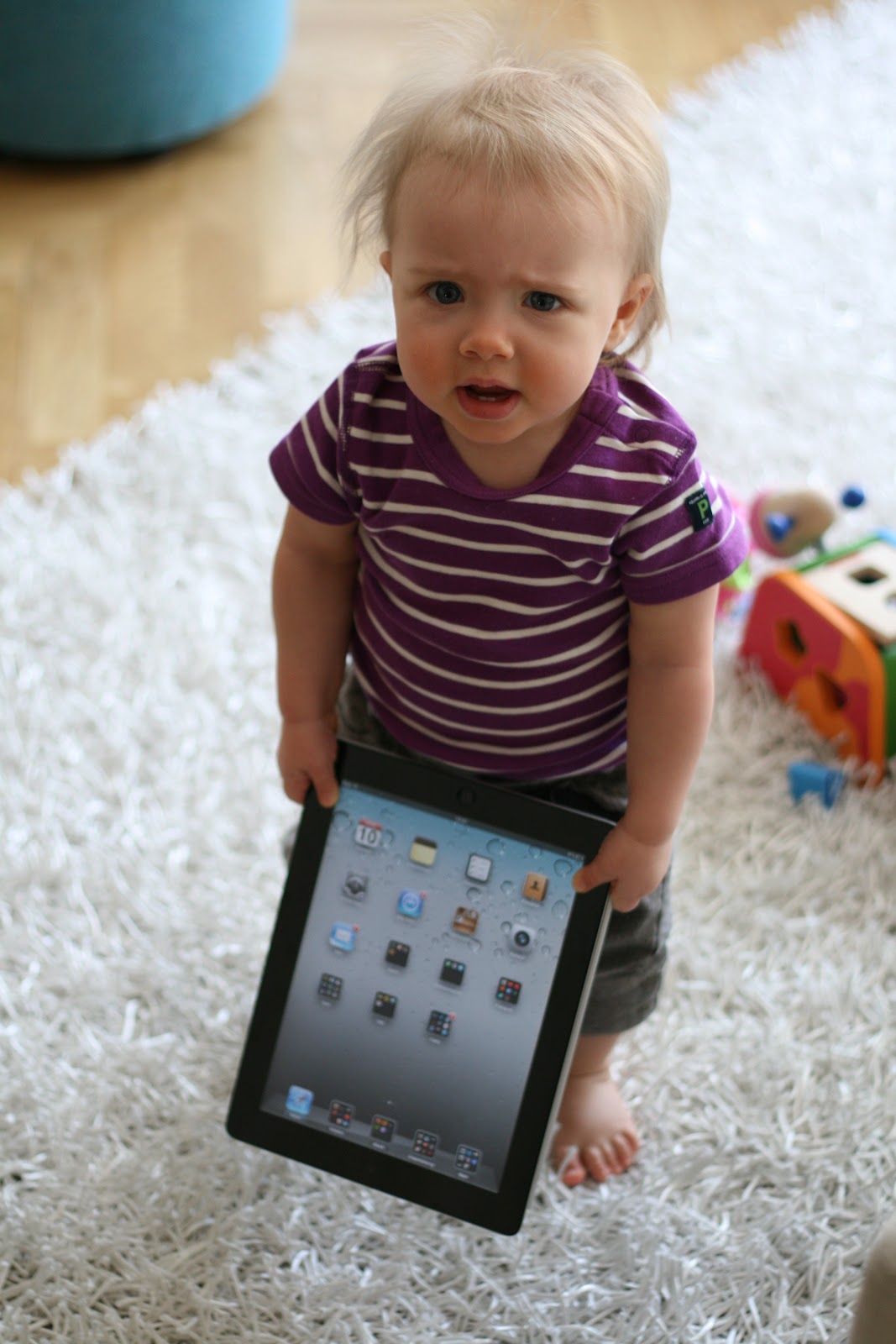 |
| It's not funny anymore! |
 |
| Pekaboo Farm happy again! |


 One thing that has really surprised me is how much my breasts have grown! I thought that happened towards the end of the pregnancy when the breasts filled with milk ahead of delivery. But those of you haven't experienced this yet; be prepared for growing one, two or even more cup sizes!
9 January 2011 is the magic date by the way!
* Or ten months actually since pregnancy is 40 weeks; why do we say it is nine months??
 Image from www.bloodhoundrealty.com
 Image from www.makemymood.com
 Image from www2.warwick.ac.uk
 Image from utopiaorbust.files.wordpress.com
Radical as it may sound it illustrates well the scale of the problem. If we are to stop the increase in global average temperatures at two degrees this may be the only way to go.
They politicians went on discussing if society will succeed making a change (even if not as drastic and radical as the above), what the necessary changes in the economy and in consumption patterns will be and how we can consume without destroying the planet, but that's another post!
* This would be tougher than any of the targets that the EU has committed too so far or that are on the table in the climate change negotiations. Sweden's commitment is 40% by 2020 on 1990 levels.
**Today, 2009, emissions from meat production is equal that of 4 million cars on Swedish streets.

 Image from svenskakyrkan.se
The topic made me think of recent "advertising" from the Swedish church ahead of All Saints' Day, a day to commemorate the dead. In Sweden the custom is to put wreaths and candles on the graves of passed loved ones. If you pass by a Swedish cemetery on this particular weekend you will see hundreds of flickering lights - so beautiful and solemn. Image from solakra.blogg.se
On the Swedish church website A Light in the Dark there are texts about what this holiday / custom is about and why it has become important for people. One writes that nowadays few have family and roots where they live and then it becomes more important to remember at least once a year. The need to connect becomes stronger when home (even though "home" can be fluid) is far away. Maybe it's that old cliché - "distance makes the heart grow fonder". And distance can be time as well, and not just geographical distance.
Eva Brunne* writes:
Lighting candles, remembering, thinking of what went so well, but also on that which didn't go well. It's like the candles relieves thoughts and feelings. Many times I have walked around the cemetery and heard parents tell stories to their little children about a grandmother or grandfather they perhaps have never even met. A story that connects and links to the future. And then they light the candle. [The light] points forward and into a life where we carry many stories with us that are necessary for our continued life.
But light also refers to optimism in dark times. There is always a way to light up the dark; the dark never wins. Life prevails over death. Good is stronger than evil.
I think a lot about that in these times of success for the Sweden Democrats, that, in my view, racist and backward-looking party. I sure hope that the voters that seem attracted to (according to the polls) these dark views find some light in their lives well ahead of next year's election** so that the Sweden Democrats don't get into Parliament.

I have chosen the second topic this time around. It would have probably been the perfect post for last Saturday, which was International Women's Day, but six days late isn't too bad!
8 VOICES ON GENDER EQUALITY IN SWEDEN
First, some thoughts from Swedish personalities on the best and worst with being a woman in Sweden today*.
Jan Guillou, author:
- The best is that we live in the world's most gender equal country. The worst is that the gender equality has not come very far. (It's all relative.)
Katrine Kielos, temp. Editor-in-Chief, Dagens Arena, columnist
- That we live the world's most gender equal country according to the Global Gender Gap Report 2007. At the same time the worst thing is that Sweden is not gender equal, just least unequal according to the same report.
Pär Ström, integrity and gender equality debater, author of the book "Mansförtryck and kvinnovälde" (Oppression of men and female empire):
- The best with being a woman is that there is great understanding and great interest in society for women's problems and difficulties. The worst is that Sweden to an unusual high degree has typical female and male professions. This has to do with people's free choice, but a consequence is that it is more difficult for the average women to have a career.
Anitra Steen, CEO Systembolaget [state monopoly alcohol stores]:
- The absolute best thing is that there is an infrastructure that makes it possible to have children and at the same time develop your career and yourself. That there are childcare, parental leave allowance and other tools helping one to manage family life in parallel with a career. I don't want to point out the worst things; I think that the most dangerous a woman can do is to see herself as a victim, then I rather see the advantages.
Thomas Bodström, Chair of Parliament Justice Committee:
- The best is that we probably live in the most gender equal country. The worst is that women are being abused and sexually assaulted in Sweden today.
Ebba Witt-Brattström, Professor in Literature, feminist
- That we have a global task to before the world's women show that it is possible to achieve our relatively high degree of gender equality, and at the same time combat the increasing contempt for women within and outside the country. The worst is that we right now have a meaningless debate about feminism directed by the media and with little relevance to women's reality.
Tobias Billström, Minister for Migration
- We live in one of the world's most gender equal countries. But there are still informal barriers, for example that womens labour market is so limited to the public sector.
Dilsa Demirbag-Sten, journalist and author
- The best is that me and my male fellow beings are equal before the law. That I live in a country where the state is obliged to protect me from oppression on the basis of religion, opinion, gender or sexual orientation. The worst is cultural relativism, that women are still oppressed in the name of culture and religion.
A FEMINIST GOVERNMENT VOICE
Second, some thoughts from the Swedish Finance Minister Anders Borg**. I didn't vote for them and I don't agree with most of the stuff they are doing, but Borg is one of the most sensible members of the Cabinet and he's not afraid of calling himself a feminist.
Why do you call yourself a feminist?
- Because I think it is one of our time's greatest restriction on freedom that men and women are limited by gender roles, that say what they should do and shouldn't do. Freedom is about shaping your own life, and the fact that gender roles endure is one of the greatest barriers.
It has been a bit taboo to call oneself a feminist in your party [Moderates/Conservatives], why is that?
- Historically it's been like that, but I think the attitude has changed a lot. Young people want to have the right to shape their own lives and young fathers want to be part of family life. If you want to live a good life you must take responsibility for your children and then you cannot let gender roles hinder that.
The lack of gender equality is one of Sweden's and Europe's biggest problem. When did you have your feminist awakening?
- I have worked with gender equality issues for a long time, but it becomes more concrete when you have children. More practice and less theory.
What can you as Finance Minister do to reduce the gaps between women and men?
- At the moment there is a positive development, women's salaries are increasing and women work more so that their incomes are growing. The one with the power over the money has great influence over the family; if women earn 40% less than men it has consequences. I work for getting women into the labour market, and making it easier for them when they are there.
What development has been most important during the 2000s from a feminist perspective?
- I think that the gender equality work has stood still. The positive exception is that I think I'm seeing that young men are more active as parents. When I took parental leave for the first time people laughed and said "now he's going on vacation". But the next time I saw a change in attitudes.
What is the most important feminist issue for you right now?
- The gender equality bonus. When a couple share the parental leave, and the lowest earner go back to work and the highest earner stay at home, they get 3,000 SEK in tax reductions each month.
What is required from the feminists of the future?
- You have to make yourself aware and discuss these issues with others. You have a personal responsibility.
* Source: Svenska Dagbladet 8 March 2008
* Interview in Dagens nyheter 2 March 2008


